

Reference direction: this is a product-analysis article rather than a redesign, so the execution follows the current Vertical Haus editorial template. The visual direction is restrained technical reporting with source-linked images from the Seedance 2.5 coverage set.
The fast read
| Seedance 2.5 upgrade | What changed | Production meaning | Risk to watch |
|---|---|---|---|
| Native 30-second generation | Reported direct output up to 30 seconds, instead of stitching many short clips together. | Better for social ads, trailers, music-video beats, vertical drama tests and product loops. | Longer clips expose continuity failures faster. |
| Up to 50 multimodal references | The model can reportedly take text, image and video references together. | Useful for preserving character, product, location and brand-world logic. | Reference overload can create muddier direction unless the brief is structured. |
| Local editing | Users can target changes inside a generated clip instead of regenerating the whole shot. | A practical step toward editability: wardrobe, background, gesture and object fixes. | Small edits can still break physics, eyelines or product accuracy. |
| 4K output and improved quality | Coverage points to 4K output and stronger motion/detail performance. | More usable for large-screen review, premium concept decks and clean social masters. | Resolution is not the same as final-shot reliability. |
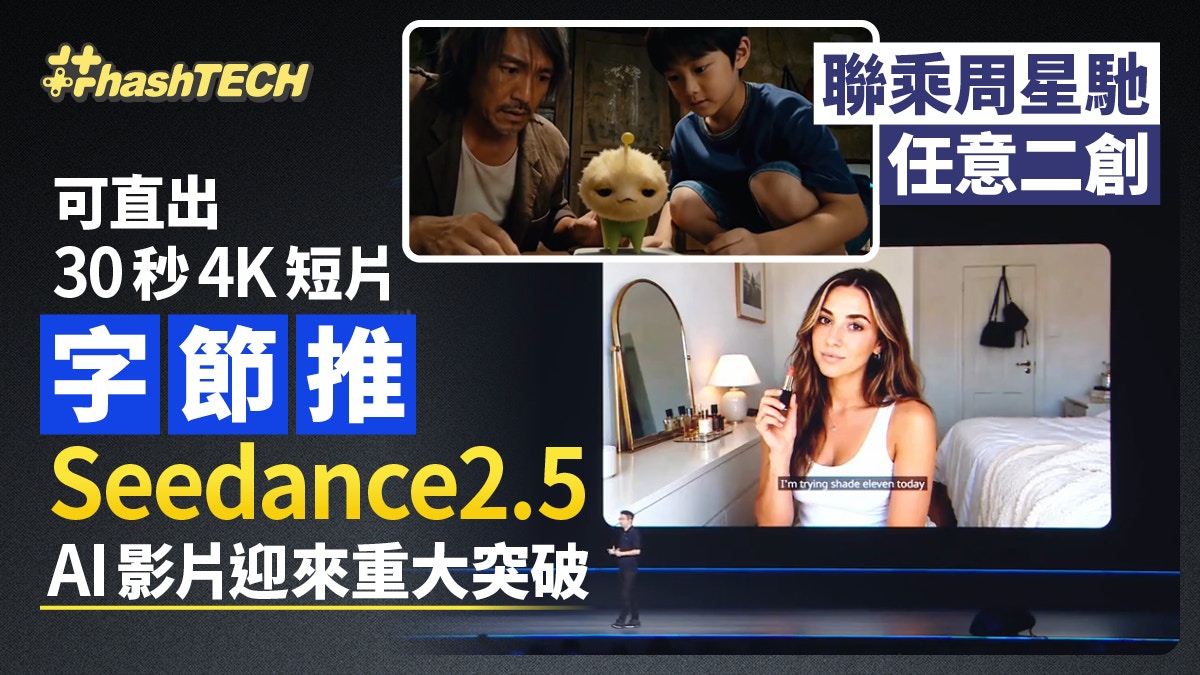
| Licensed Stephen Chow IP | Reports say Volcano Ark has AI copyright-commercialisation rights around three Chow films. | The real signal: generative video is moving from style imitation toward licensed IP packages. | Rights may be platform-, territory-, use- and template-specific. Do not assume global clearance. |
What ByteDance announced
Seedance 2.5 is the newest reported upgrade to ByteDance's video-generation line, distributed through Volcano Engine and Volcano Ark. Coverage from late June 2026 describes the model as a bigger step than a normal quality bump: it can generate longer native clips, accept dense multimodal references, perform local edits, and output higher-resolution video.
That matters because most AI video systems still break down in the exact places production teams care about: multi-shot continuity, character consistency, product stability, readable motion, art direction control and revision after review. A demo can survive five seconds of visual surprise. A campaign cannot survive an unstable logo, changing pack shape, drifting actor face or background that contradicts the brand world.
Seedance 2.5 appears designed around that gap. The headline features are not just more spectacular outputs. They point toward the same basic production need: keep more of the director's intent intact for longer.
1) Native 30-second clips change the planning unit
The most shared feature is native generation up to 30 seconds. If the model can hold a subject, environment and action across that span, it changes the unit of AI video planning from "shot fragment" to "usable social beat."
That does not mean every output becomes a finished ad. It means a producer can test the shape of a 15- to 30-second asset without manually stitching six separate clips, colour-matching them, hiding motion discontinuities and hoping the character survives between generations.
For Vertical Haus-style work, the clearest uses are short-form campaign tests, vertical drama pre-vis, creator-style concept loops, music-video experiments, teaser trailers, and brand-world mood films. The hard part becomes direction: a 30-second generation needs a beginning, a movement logic, a visual escalation and an end frame. It cannot just be a prettier prompt.
2) Fifty references turns prompting into shot supervision
Reports say Seedance 2.5 can work with up to 50 multimodal references. That is not just a bigger upload count. It is a different creative interface.
References can cover character face, wardrobe, product shape, setting, lighting, camera language, source video motion, previous brand assets and approved concept frames. In a real job, those references matter more than clever prompt adjectives. They are the boundary conditions that stop a model from inventing the campaign from scratch.
The catch is that 50 references can also become noise. A good production workflow should split them into roles: identity references, environment references, movement references, pack/product references, forbidden examples and final-frame references. Without that structure, the model receives a pile of taste signals but no hierarchy.
3) Local editing is the feature production teams should test first
Local editing sounds less glamorous than 30-second generation, but it may be the more useful feature. Production teams rarely need an untouched first generation. They need a way to change one thing without losing everything else that worked.
If Seedance 2.5 can reliably modify a costume detail, product position, background element, facial expression, hand action or logo area while preserving the rest of the clip, that is a material workflow upgrade. It turns AI video from roulette into reviewable craft.
The operating test is simple: generate a clip, approve 80 percent of it, then ask for a targeted fix. If the model preserves motion, composition, character identity and temporal logic while changing only the requested region, it is ready for campaign exploration. If every edit restarts the shot, it is still mainly a demo machine.
4) 4K helps review, but does not solve truth
Seedance 2.5 coverage also points to 4K output and improved visual quality. That will help directors, agencies and clients review work on large screens without compression hiding every flaw. It also means outputs can survive more aggressive social crops and reframing.
But quality is not truth. A 4K hallucinated product is still a bad commercial asset. A clean face that drifts from shot to shot is still unusable for casting continuity. A beautiful scene that implies a false claim still fails legal review.
The practical way to test 4K AI video is not "does it look cinematic?" It is: can it preserve the product, talent, claim, environment and brand code under review pressure?
The part most people missed: Stephen Chow rights are the bigger story
The user-facing feature list is impressive, but the more important signal is legal and commercial. Several Chinese-language reports on the Seedance 2.5 rollout also point to ByteDance's Volcano Ark AI copyright-commercialisation platform and its rights around Stephen Chow films. The name sometimes gets mistyped in English discussion as "Steven Chiaw"; the relevant filmmaker is Stephen Chow.
The reported titles are The King of Comedy, CJ7 and The God of Cookery, connected through Bingo Group. The important point is not that users can imitate a famous director more easily. The important point is that ByteDance is testing what an authorised IP layer for generative video could look like.
That is a serious shift. Most generative-video debate has focused on whether models imitate copyrighted work in uncontrolled ways. This points toward a different market: licensed film worlds, character systems, templates, scenes and creator challenges where the platform, rights holder and user all know the rules before a generation starts.
For studios and brands, that matters more than one model benchmark. If rights packages become native to generation platforms, a producer could brief inside a cleared universe rather than dancing around "in the style of" language. A rights holder could monetise old catalogue material as interactive templates. A platform could offer safer fan creation without pretending copyright is irrelevant.
The caveat is scope. A reported platform right is not a blank cheque. It may be limited by territory, title, clip, template, use case, account type, output policy, distribution channel and commercial terms. Any brand using this type of feature still needs clearance notes before publishing generated work. But the strategic direction is clear: AI video is becoming an IP marketplace, not only a model race.

Why this matters for AI commercials and micro drama
Seedance 2.5 sits exactly where short-form entertainment and advertising are converging. Longer generation helps tell a full social beat. Reference-heavy control helps preserve campaign assets. Local editing helps producers revise rather than restart. Licensed IP helps platforms offer recognisable worlds without asking every user to improvise the legal layer.
For micro drama, the rights layer is especially relevant. Short drama depends on repeatable worlds, genre codes and fast audience recognition. If a platform can offer authorised templates from known films, it can give creators a head start: familiar emotional grammar, character archetypes, props, scenes and comedic timing, all inside a controlled rights wrapper.
For advertising, the same logic applies to campaign worlds. A sports brand might license an athlete universe. A streamer might open a show template for fan promos. A beauty brand might build a cleared creator challenge around a specific campaign film. The model becomes one part of the system; the rights and operating rules become the product.
What we would test before trusting Seedance 2.5
- Continuity: one character, one product and one location across a full 30-second generation.
- Reference hierarchy: identity, product, movement and lighting references tested separately before mixing all 50.
- Local edit reliability: change one object or region while preserving motion and composition.
- Commercial truth: check product shape, label, claim and usage context frame by frame.
- Rights scope: document what the platform actually allows for any licensed IP or film-template output.
- Export fit: test vertical, square and horizontal crops from the same source generation.
Production takeaways
First, Seedance 2.5 should be judged by controllability, not only by highlight reels. Thirty seconds is useful only if the model can keep the job's core facts stable.
Second, reference management is becoming a producer skill. The best teams will not simply upload more references; they will label them, rank them and decide which ones are binding.
Third, the Stephen Chow rights signal is the thing to watch. When licensed film IP becomes part of the generation workflow, AI video stops being only a technical category and becomes a new distribution, remix and catalogue-monetisation system.
Vertical Haus builds AI production systems for short-form commercials, micro drama pilots and social video engines where creative control, rights and review matter as much as model quality.
Sources
- TechTimes: ByteDance Seedance 2.5 native 30-second AI video coverage
- HK01: Seedance 2.5, 30-second 4K video and Stephen Chow partnership coverage
- Science and Technology Daily: ByteDance Volcano Engine FORCE coverage
- Sina Finance / Tech: Volcano Engine FORCE and AI copyright commercialisation coverage
- Volcano Ark: Seedance 2.5 promotion page
- ByteDance Seed: Seedance 2.0 official model page for technical lineage context
Method note: product claims and IP-rights references are based on publicly accessible reporting and source pages reviewed on Monday, June 29, 2026. The rights discussion is intentionally scoped: licensed platform use does not automatically imply global commercial clearance for every generated output.