
The week in one sentence: AI image, generative video and AI sound generation became easier to place inside real campaigns, but the asset’s consent, origin, edit history and commercial value now matter as much as the output itself.
1) Meta Muse turns a model launch into a three-day consent and provenance test
Dated evidence: Meta launched Muse Image and previewed Muse Video on July 7, 2026. The company says Muse Image uses search and code tools, self-refines its drafts and composes from multiple references. It ranked number two on Arena for text-to-image, single-image editing and multi-image editing as of July 5. Meta’s unreleased Muse Video preview ranked number three for text-to-video, includes native audio and still has acknowledged gaps in audio-video sync and physically accurate fast motion.
Meta also presented Content Seal, an invisible watermark intended to remain detectable after crops, compression, resizing and screenshots. A July 10 Reuters analysis tested 40 Muse images: the preview detector verified every original, but failed to verify 55% after the images were cropped to roughly one-third to one-half of their original size. Meta told Reuters that heavy cropping can weaken the signal.
The rights problem moved even faster. Muse initially let people reference public Instagram accounts in generated images. On July 10, after objections from users, CAA and SAG-AFTRA, Meta removed that feature. The model remained available; the public-profile reference route did not. Reuters’s watermark result came from heavy crops, not a benchmark for every routine resize, but it shows why teams should test the delivered asset rather than infer resilience from the master.
Why it matters for AI image and video production: these are two different controls. A watermark may indicate which system made an output. It does not prove that the people, products, locations or styles supplied as references were authorized. Production teams need both provenance and consent, and ordinary campaign transformations such as crops and platform resizes can test the first control before an asset even reaches the audience.
Workflow dependency map: approved references, talent and likeness releases, prompt and edit log, generator and model version, crop/render tests, disclosure route, territory, media placement and final legal owner.
Decision now: do not treat vendor watermarking as the asset register. Keep explicit source and consent records, then test the exact delivered crops and transcodes rather than only the master file.
Source: Meta AI, Muse Image and Muse Video (July 7, 2026) →
Independent test: Reuters, Content Seal crop analysis (July 10, 2026) →
Industry response: TheWrap, Meta removes the public-profile feature (July 10, 2026) →
2) Runway Dev puts image, video and audio models behind one production layer
Dated evidence: Runway launched Runway Dev on July 8, 2026 as one API for its own Gen-4.5, Aleph 2.0 and Act-Two models alongside third-party image, video and audio systems including Seedance, GPT Image 2 and ElevenLabs. Runway says teams at Adobe, ElevenLabs, Shutterstock, Figma Weave, Gamma and Silverside have already used the platform to generate millions of images, videos and other media. Those adoption, security and uptime statements are vendor-reported; the launch does not publish an independently audited customer-outcome study.
The important part is not the model list. Runway Dev packages recurring outcomes as Recipes for ad localization, product ads, product swaps, multi-shot video and marketing stock imagery; custom Workflows can chain multiple models behind a single endpoint. Enterprise claims include zero-data-retention support, no-training commitments, spend controls, SOC 2 Type II compliance, IP indemnification and 99.9% uptime.
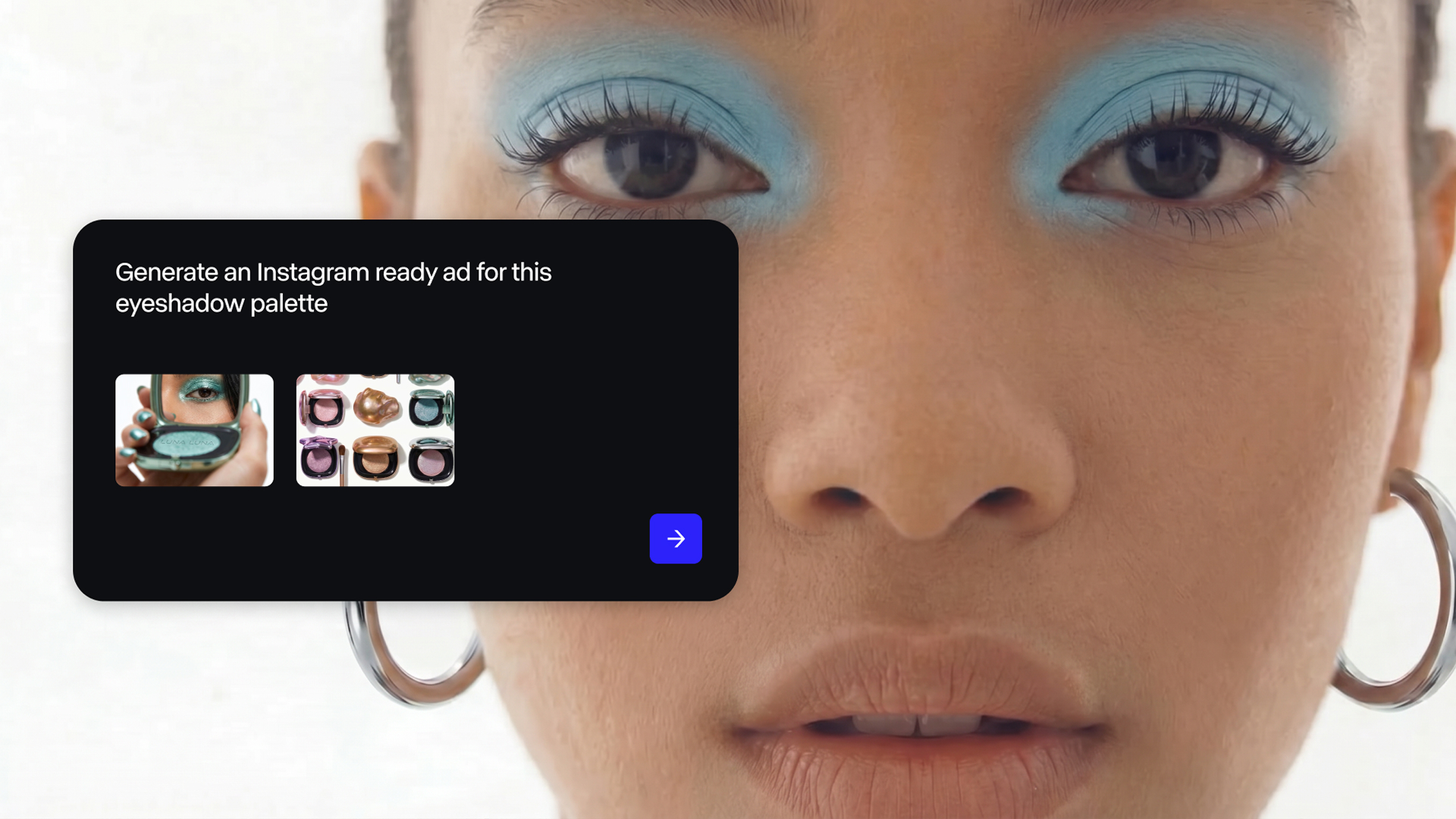
The production economics are now inspectable: Runway prices credits at $0.01. A ten-second Gen-4.5 attempt is $1.20; Seedance 2 is $3.60 at 480p or 720p, $4.00 at 1080p and $15.00 at 4K. A ten-second Product Ad Recipe is $4.16 at 720p or $4.56 at 1080p, while one localized ad image is $0.21. Those are compute charges per call, not the cost of a usable commercial after reruns, curation, retouching, sound, rights and delivery.
Why it matters for film and advertising: the production advantage shifts from loyalty to one model toward routing. A team can send different jobs to the model that best fits cost, motion, consistency or rights constraints. The trade-off is concentration: model selection, spend data, workflow logic and failure handling now sit behind one vendor layer.
Workflow dependency map: approved source media, recipe or workflow version, model allowlist, golden test set, budget ceiling, output QA, moderation response, fallback provider, rights metadata and human finishing.
Decision now: build a repeatable ten-asset test before migrating a live workflow. Compare cost per usable output, not cost per generation, and pin a version wherever the same campaign must be reproduced across markets or months.
Source: Runway, Introducing Runway Dev (July 8, 2026) →
Source: Runway API pricing and Recipe costs (accessed July 12, 2026) →
3) Dollar Shave Club shows the useful line between creative idea and AI execution
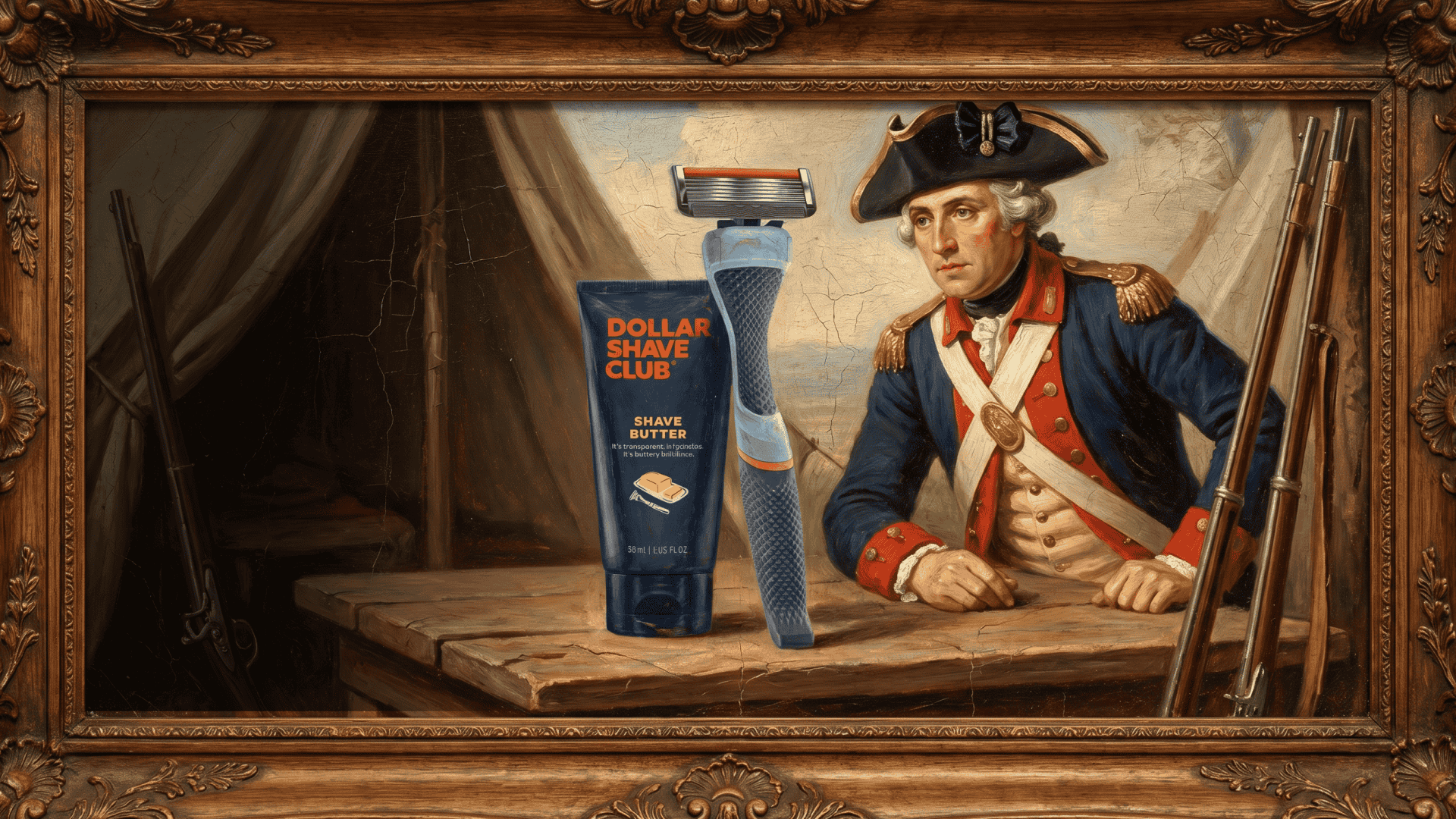
Dated evidence: Modern Retail reported on July 9 that Dollar Shave Club made its America 250 campaign in-house with Claude and Higgsfield. Digiday’s July 7 interview with chief brand and innovation officer Laura Higgins says the company already makes 90% of its advertising internally; the campaign moved from brief to first draft in two to three days, reached a finished 30-second cut in about a week and delivered its formats within a month.
The distinction is more valuable than the speed claim. The team originated the comedic premise and used AI to storyboard, execute and iterate. Higgins described a different standard for other work: real footage carries the meaning when the story depends on genuine military service, while deliberate artificiality can suit an absurd product idea. AI was the production method, not the reason for the idea.
That reading is reinforced by July 10 Digiday reporting and interviews with executives from Snap, Reddit, LinkedIn, TikTok, Google, Meta and OpenAI. Across competing platforms, the warning was similar: shared base models and thin prompts can push creative toward the mean. Faster execution and more versions do not automatically produce memory, taste or difference.
What the evidence does and does not show: Dollar Shave Club supplies a credible cycle-time benchmark for a small, experienced in-house team. The coverage does not publish reach, conversion lift or cost comparison, so it is not proof that the AI-made campaign outperformed a conventional one.
Workflow dependency map: human-owned concept, brand visual grammar, product truth, reference and likeness rights, storyboard, format plan, art-direction checkpoints, audience test, performance holdout and post-campaign learning.
Decision now: write down the creative invariant before generating variants. If a team cannot name the idea, tone and recognizable brand elements that must survive every version, extra output will scale sameness rather than effectiveness.
Source: Modern Retail, Dollar Shave Club’s in-house AI campaign (July 9, 2026) →
Source: Digiday, Dollar Shave Club production interview (July 7, 2026) →
Market context: Digiday, platform leaders on scale without sameness (July 10, 2026) →
4) Google makes AI disclosure an ad-trafficking field—and volume still is not value
Dated evidence: Google announced on July 9 that ads across Search, YouTube and Discover will gain a “How this ad was made” section in My Ad Center. Assets produced with Google’s own generative advertising tools are disclosed automatically. Advertisers can designate externally generated or materially edited assets through a new AI-label control.
Google’s implementation guidance makes this operational. The control rolls out through July across Google Ads, Display & Video 360, Campaign Manager 360, Merchant Center and Ads Editor. Campaigns targeting the European Union, India or New York can receive visible overlays. Google embeds SynthID and C2PA metadata in images and videos made inside Google Ads tools, but explicitly says the platform setting does not guarantee legal compliance.
There is a practical rendering detail: Google says a self-applied label should sit at least 5.5% in from every edge, and image enhancements can crop it. Disclosure therefore has to be tested in the delivered placement, not merely approved in the design file.
A separate July 6 practitioner report shows why the governance layer cannot stop at labeling. In an eight-week, single-campaign test on one automotive-accessories account spending roughly $100,000 per month, the AI Max arm produced 11.3% more clicks and 7.9% more impressions on near-identical spend. It also produced 5.7% more conversions—about two—but roughly 13% less conversion value. The activity gains were statistically significant; the conversion and revenue differences were not. The honest conclusion is inconclusive and directionally negative, not that AI Max failed or that one account generalizes to the platform.
Why it matters for AI advertising: platforms are adding the fields needed to disclose how creative was made, while performance automation is adding more ways to expand delivery. Neither replaces a team’s responsibility to preserve origin data, define material edits and measure commercial value rather than activity alone.
Workflow dependency map: generator and edit log, AI-label owner, machine-readable provenance, visible-label safe zone, enhancement settings, target territories, legal review, control group, conversion value and creative-quality review.
Decision now: add AI origin and material-edit status to the asset library before media upload. Then judge automated expansion against value, margin or qualified demand—not only clicks, impressions or variant count.
Source: Google, Expanding AI transparency in ads (July 9, 2026) →
Implementation: Google Ads AI labels and disclosures (accessed July 12, 2026) →
Practitioner test: Grayvault, Google AI Max experiment results (July 6, 2026) →
5) AI sound gets a shared label while voice tests expose the trust gap
Dated evidence: on July 10, IFPI, RIAA, A2IM, WIN, IMPALA, The Grammys, SAG-AFTRA and the Human Artistry Campaign proposed two voluntary track-level labels for digital music services. “AI-Generated” covers recordings where generative AI created the whole or primary creative element, including a lead vocal, key instrumental performance or fully prompted track. “AI-Assisted” covers substantially human recordings where AI supplied some expressive elements and humans performed the lead vocal and primary instruments.
The scale explains the urgency. The announcement cites Deezer’s April report that AI-generated tracks were 44% of new deliveries and Apple Music’s statement that more than one-third of uploads were “100% AI.” The proposed labels will be supported by metadata, but are not yet implemented and currently exclude lyrics, composition, music videos and cover art.
A July 6 blind-listening study adds the audience side. Crowd React Media tested 1,326 US weekly radio listeners aged 18 to 45 on human and AI versions of two reads. On the first clip, overall appeal was effectively level at 60% for the human voice and 61% for AI; humor was the only statistically significant performance gap, with 33% describing the human read as funny versus 26% for AI. After disclosure, 48% of listeners who learned they had heard a human voice felt more favorable. In the AI group, 25% became more favorable, 20% felt worse and most reported no change.
Why it matters for film and advertising sound: the voice test suggests synthetic performance can clear a basic quality threshold in some contexts; the music data establishes scale and a proposed labeling framework, not a quality result. The harder production questions are consent, role, disclosure and emotional fit. Utility reads and rapid variants may tolerate generated performance; humor, character and personality-led audio still benefit from human timing and audience trust.
Workflow dependency map: script and composition ownership, performer or voice consent, generated versus assisted status, model and source inputs, stems, edit history, territory, usage licence, disclosure metadata, audio QA and music-supervisor approval.
Decision now: start a stem-level provenance record now, before platforms adopt the proposed labels. A track-level icon cannot explain which vocal, instrument, lyric, composition, sound effect or visual element was generated.
Source: IFPI, shared labels for generative AI in sound recordings (July 10, 2026) →
Study: Crowd React Media, AI voiceover blind test (July 6, 2026) →
Independent summary: Radio Ink (July 7, 2026) →
What can break a live campaign now
| Signal | New dependency | Failure mode | Move this week |
|---|---|---|---|
| Meta Muse | Consent record plus crop-level provenance test | Unauthorized likeness or missing watermark after delivery edits | Require opt-in references and test every final format |
| Runway Dev | Model routing, pinned versions and spend logs | Silent drift, surprise rerun cost or vendor concentration | Build a golden test set and cost-per-usable baseline |
| Campaign craft | A recognizable creative invariant | More assets that look and sound like everyone else | Lock idea, tone and brand grammar before variants |
| Google AI labels | Asset-level origin, territory and disclosure owner | Wrong designation or cropped visible label | Label at ingestion and test platform renders |
| Generated sound | Stem, voice and performer provenance | Rights ambiguity or disclosure-driven trust loss | Separate AI-generated from AI-assisted at source |
Operator checklist for the next production sprint
- Image: attach a consent and reference manifest before the first generated frame.
- Video: price ten usable tests across the intended resolution, then include reruns and finishing.
- Advertising: add AI origin, material-edit status and disclosure ownership to the asset library.
- Sound: record generated versus assisted status at stem level, not only on the final mix.
- Measurement: protect a control group and report conversion value, not just creative volume.
Build story, production and release around demand.
Sources
- Meta AI: Introducing Muse Image and Muse Video (July 7, 2026)
- Meta: Muse Image in Meta products and future advertising surfaces (July 7, 2026)
- Reuters: Muse Image detector crop analysis (July 10, 2026)
- TheWrap: Meta removes public Instagram reference feature (July 10, 2026)
- Runway: Introducing Runway Dev (July 8, 2026)
- Runway: API and Recipe pricing (accessed July 12, 2026)
- Modern Retail: Dollar Shave Club AI campaign production (July 9, 2026)
- Digiday: Dollar Shave Club in-house production interview (July 7, 2026)
- Digiday: Platform leaders on creative scale and sameness (July 10, 2026)
- Google: Expanding AI transparency in ads (July 9, 2026)
- Google Ads: AI label implementation guidance (accessed July 12, 2026)
- Grayvault: Google AI Max controlled experiment (July 6, 2026)
- IFPI: Generative AI sound-recording label proposal (July 10, 2026)
- Crowd React Media: AI voiceover blind study (July 6, 2026)
- Radio Ink: Independent study summary (July 7, 2026)