1) Runway Aleph 2.0 enters Figma Weave and makes video editing more like directed design
Dated evidence: Runway announced on June 22, 2026 that Aleph 2.0 is now in Figma Weave. Runway describes Aleph 2.0 as an in-context video editing model that edits specific parts of existing footage while preserving the rest of the shot. Figma’s June 18 product note explains the operator flow: extract a frame, restyle it, connect it back to the Aleph 2.0 node with a timestamp, then let the edit carry through the relevant frames.
Why it matters for AI film and advertising: this is the clearest current-week sign that AI video is becoming a production surface instead of a prompt box. Directors, editors and designers can make a frame-level decision, sequence that decision in a canvas, and keep the surrounding shot context intact. For agency work, that matters because campaign iteration usually starts from footage, boards, references, product frames and client comments, not from an empty text prompt.
Workflow dependency map: source clip rights, approved keyframes, reference images, timestamp notes, edit intent, model surface, review owner, version history, platform export and final legal/brand approval.
Production impact estimate: the most defensible near-term gain is in versioning: wardrobe, colour, setting, prop, packshot and background changes across short social clips or pitch films. It can reduce the number of reshoots and roto-heavy fixes, but it still needs a human editor to judge continuity, taste and product accuracy.
Decision now: build a keyframe approval habit. If an AI edit starts from a frame-level decision, keep the source frame, prompt, timestamp and accepted result in the job folder before it enters client review.
Source: Runway, Aleph 2.0 in Figma Weave (June 22, 2026) →
Source: Figma, Direct every frame with Runway Aleph 2.0 (June 18, 2026) →
2) Adobe uses Cannes to push agentic creative from experiments into operating models
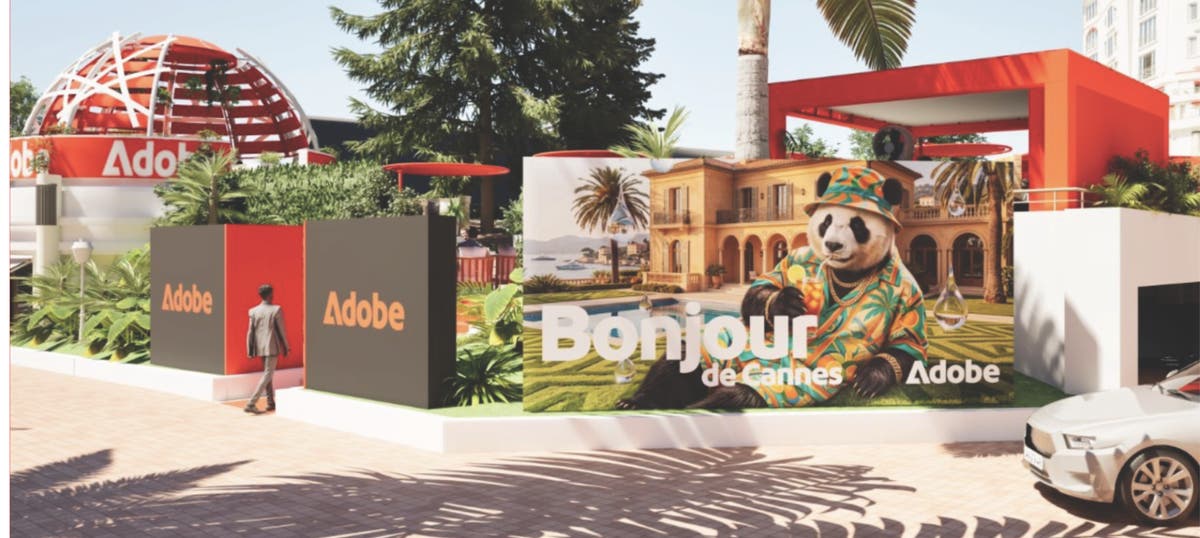
Dated evidence: on June 22, 2026 Adobe announced new agency and technology partnerships around agentic AI adoption at Cannes Lions. Adobe says Accenture, Omnicom, Stagwell’s Code and Theory, WPP, Anthropic, AWS, IBM and Microsoft are part of the ecosystem push. It also says WPP is expanding an AI Agentic Operating Model powered by Adobe technology across automotive, pharmaceutical, retail and financial-services clients.
Why it matters for production teams: this moves generative image, video and campaign work into enterprise plumbing. The question is less “which model made the asset?” and more “which system planned, created, activated, measured and approved the asset?” That is a meaningful shift for ad teams because agentic creative only creates value if it inherits brand rules, audience segments, channel requirements and measurement data.
Workflow dependency map: brand system, creative brief, customer segments, approved model list, asset permissions, campaign workspace, measurement events, review checkpoints, partner integrations and audit logs.
Production impact estimate: the fastest payoff is likely in campaign assembly and variant management, especially where agencies already use Adobe Experience Cloud and Creative Cloud. The risk is governance debt: an agentic system can create more work if it scales unapproved claims, stale product imagery or disconnected measurement logic.
Decision now: treat agent access like media access. Define what each AI agent can see, create, change and publish before it touches live campaign data.
Source: Adobe Newsroom, agentic AI agency and technology partnerships (June 22, 2026) →
3) Krea 2 makes image generation more open, steerable and production-testable
Dated evidence: Krea published its Krea 2 technical report on June 23, 2026. It introduces Krea 2 as a foundation-model series for creative exploration, including Krea 2 Raw and Krea 2 Turbo. The report says Krea 2 focuses on steerability from text and image inputs through a prompt expander and style-reference system, ranks among the top 10 text-to-image models on Artificial Analysis, and places second among independent labs.
Why it matters for AI image generation: advertising teams need controlled exploration, not only a polished default. A steerable image model is useful when a campaign needs multiple directions around the same product, character, palette, camera language or retail environment. Open weights and technical transparency also make this a better candidate for controlled testing than a closed black-box generator with unclear behaviour.
Workflow dependency map: style references, product references, negative constraints, prompt-expansion settings, model variant, seed or run ID, usage licence, evaluation board, retouch owner and final asset approval.
Production impact estimate: Krea 2 is most useful for early art direction, visual territories, mood-board branches and paid-social concept families. It should not be used as a final product-accuracy system without retouching and claim review, because image exploration still tends to favour visual plausibility over commercial truth.
Decision now: score image-model tests by repeatable campaign control: product fidelity, style consistency, text handling, facial/hand reliability, editability and rights position. Raw image quality alone is not enough.

Source: Krea, Krea 2 technical report (June 23, 2026) →
4) TikTok Symphony Agent brings AI creative closer to culture, creator search and activation
Dated evidence: TikTok announced at Cannes Lions on June 22, 2026 that it is introducing Symphony Agent across several creative solutions. TikTok says the agent combines advertiser goals with top-performing content, emerging trends and platform insights to develop customized video content, source relevant creator content and find creators. The rollout includes Symphony Creative Studio, Content Suite AI Search and TikTok One, with safeguards including AI labels, invisible watermarks and content moderation filters.
Why it matters for AI advertising: the ad value is not just generated video. It is the connection between trend intelligence, creator-market fit, video production and campaign activation. That is the missing layer in many AI ad tools: they can make assets, but they do not know what the platform is rewarding this week or which creator context gives the asset credibility.
Workflow dependency map: brand goal, audience, creator criteria, trend window, usage rights, AI label policy, moderation outcome, whitelisted content, paid-usage terms and performance feedback.
Production impact estimate: this can cut early TikTok creative planning from separate trend research, creator search and storyboard passes into one workflow. The danger is sameness: if every brand uses the same platform signals, distinctive taste and creator judgment become more important, not less.
Decision now: keep a human creative filter between platform trend recommendations and final ad concepts. Use the agent to find patterns and options, then choose the idea that only the brand could credibly own.
Source: TikTok Newsroom, Symphony Agent at Cannes Lions (June 22, 2026) →
5) Alexa+ Agentic Ads and ElevenLabs real-time STT show sound becoming an action layer
Dated evidence: Amazon Ads introduced Alexa+ Agentic Ads on June 23, 2026, saying customers can view an ad, ask questions, review options and complete a purchase through a natural Alexa+ conversation. Launch examples include Papa Johns food ordering and concert-ticket actions for artists including Beck, Jill Scott and Omar Courtz. On June 25, ElevenLabs published an architecture guide for real-time speech to text under 200ms, updated June 28, covering WebSocket/WebRTC tradeoffs, partial transcripts, VAD, commit control and voice-agent timing.
Why it matters for sound generation and advertising: voice is becoming more than narration or synthetic talent. It is becoming the interface where media, commerce, customer service and campaign response meet. For film and advertising teams, that means audio assets need to be designed alongside action flows: what the listener can ask, what the system can answer, when a transcript becomes reliable and how a purchase or booking is confirmed.
Workflow dependency map: spoken prompt, audio capture, partial transcript, VAD/commit policy, LLM response, text-to-speech output, ad offer, checkout or booking action, privacy notice, cancellation flow and proof of consent.
Production impact estimate: conversational ads can shorten the path from awareness to purchase for simple, high-intent actions. Real-time STT matters because latency changes whether the experience feels like a conversation or a laggy form. The creative team now has to script interruptions, pauses, confirmations and errors, not only the opening line.
Decision now: write voice ads as interaction design. Every generated voice, transcript, answer, payment step and fallback should be reviewed as part of the commercial, not as a technical afterthought.

Source: Amazon Ads, Alexa+ Agentic Ads (June 23, 2026) →
Source: ElevenLabs, real-time speech-to-text architecture guide (published June 25; updated June 28, 2026) →
Risk to live campaigns this week
| Workflow area | Primary dependency | Brand/legal risk | Delivery impact |
|---|---|---|---|
| Directed AI video | Keyframes, timestamps, edit notes and source-clip rights | Medium-high: frame edits can imply product behaviour that was never filmed | High for social variants, pitch films and repair work |
| Agentic creative operations | Brand rules, data access, workspace permissions and audit logs | High if agents scale stale claims or unapproved assets | High for campaign assembly and version management |
| Open image-model testing | Reference controls, licence review, model/version tracking | Medium: exploratory images can drift from commercial truth | Medium-high for art direction and concept families |
| Platform-native AI ads | Trend signals, creator permissions, AI labels and moderation checks | Medium-high: sameness and creator-rights mistakes scale quickly | High for TikTok-first creative planning |
| Voice commerce | Low-latency STT, confirmation copy, privacy and checkout controls | High: unclear consent or failed confirmations can break trust | Medium-high for simple high-intent actions |
Operator checklist for next sprint
- Video: store AI edit decisions as keyframes, timestamps, prompts and accepted renders.
- Image: evaluate Krea 2 or any open model against repeatable brand control, not only sample beauty.
- Advertising: connect agentic tools to permissioned campaign workspaces before scaling variants.
- Sound: review voice commerce as interaction design with latency, consent and fallback states.
We can map AI image, video, sound and ad-platform changes to your campaign workflow, then turn the useful ones into a sprint-ready production plan.
Sources
- Runway: Aleph 2.0 is now in Figma Weave (June 22, 2026)
- Figma: Direct every frame with Runway Aleph 2.0 (June 18, 2026)
- Adobe Newsroom: Adobe accelerates agentic AI adoption (June 22, 2026)
- Krea: Krea 2 technical report (June 23, 2026)
- TikTok Newsroom: TikTok at Cannes Lions 2026 and Symphony Agent (June 22, 2026)
- Amazon Ads: Alexa+ Agentic Ads (June 23, 2026)
- ElevenLabs: Real-time speech to text under 200ms (published June 25; updated June 28, 2026)