1) Runway Agent turns AI video into a conversation, then hands back the timeline
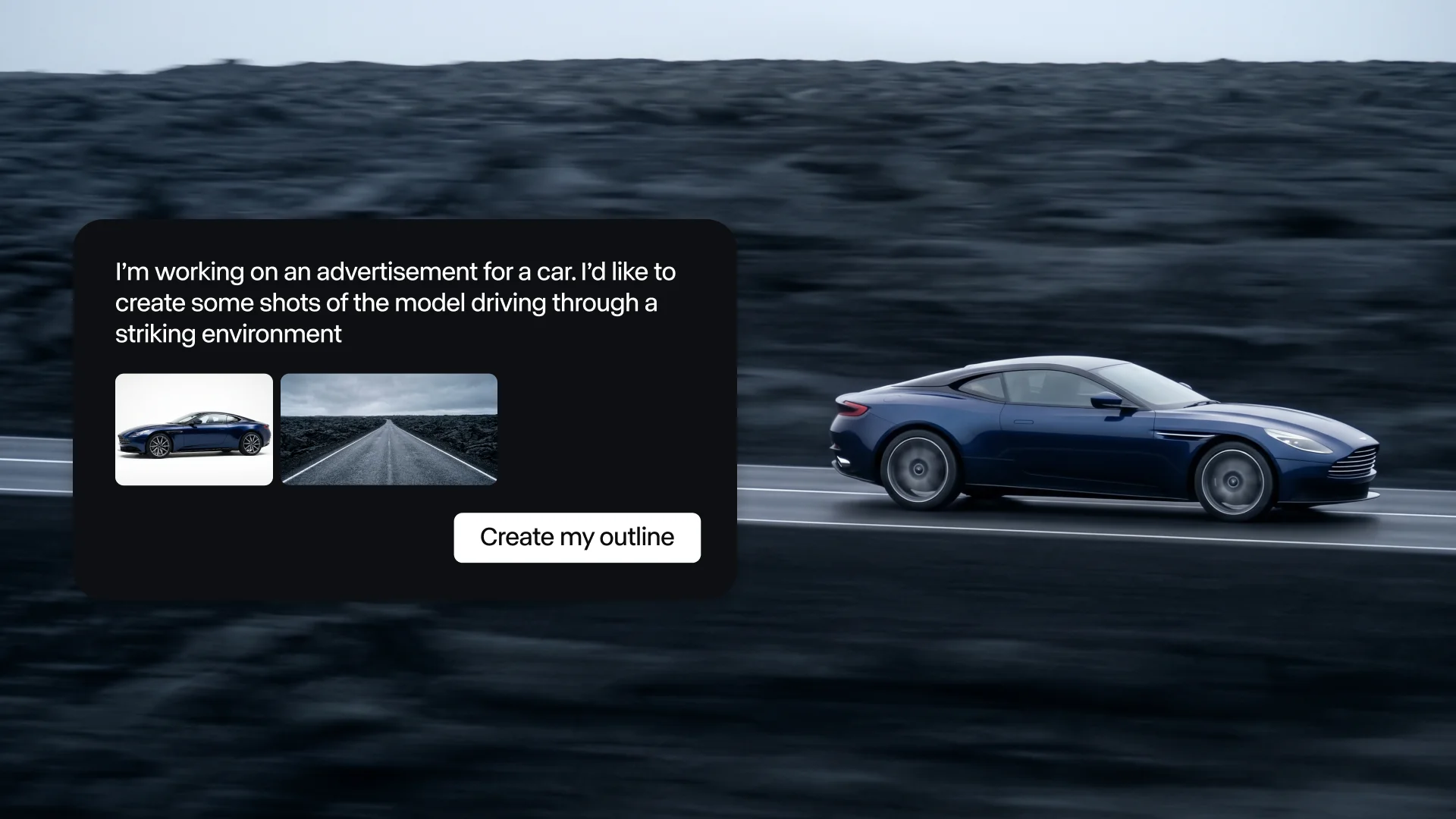
Dated evidence: Runway introduced Runway Agent on May 13, 2026, describing it as an agentic creative partner that can take an idea to a ready-to-publish video in one conversation. The launch page says it proposes a concept, develops story beats, sets visual direction, then builds multi-scene video with voiceover, dialogue, and music. Runway says it is available now.
Why it matters for AI film and advertising: this is the strongest current signal that video generation is moving from isolated prompting to directed production. The important phrase is not “one prompt.” It is the handoff: the agent generates the piece, then the editor remains available for final adjustments. That gives agencies a path to compress early concepting without pretending the first pass is the finished craft.
Production impact estimate: for social cutdowns, product teasers, and pitch pre-vis, a conversational first assembly can plausibly remove one to two internal prep cycles before a creative director reviews the route. Treat that as faster alignment, not as automatic final delivery.
Decision now: pilot Runway Agent on one format where the creative grammar is already known: a 15-second product launch, a three-scene brand campaign variant, or a short film pre-vis beat. Measure saved review cycles, not just render speed.

Source: Runway, Introducing Runway Agent (May 13, 2026) →
2) YouTube Brandcast pushes AI ad production from brief to media surface
Dated evidence: Google’s Brandcast 2026 update says YouTube announced Custom Sponsorships that use AI to surface videos tailored to a brand moment, a Custom Content Shelf for Masthead placements, two-click Buy with Google Pay on CTV, Affiliate Creator Partnerships Boost, and multimodal video creation using Gemini, Nano Banana, and Veo to move from creative brief to final production with a few prompts.
Why it matters for advertising teams: the AI ad stack is now collapsing three steps that were historically separate: ideation, production, and placement packaging. That is useful for speed, but it also raises the price of sloppy briefs. When the platform can generate and distribute variants quickly, the campaign team needs sharper guardrails on brand claims, creator fit, retail availability, and conversion intent.
Production impact estimate: where an advertiser already has product photography, approved copy blocks, and audience hypotheses, multimodal ad creation can turn a week of asset adaptation into a same-day variant queue. The bottleneck shifts to approval discipline and measurement design.
Decision now: write campaign briefs as production-and-media instructions: hero claim, prohibited claims, creator adjacency, aspect ratios, commerce action, and the learning question for each generated route.
Source: Google, Brandcast 2026 advertiser updates →
Source: YouTube Brandcast 2026 topic hub →
3) Image pipelines are moving off legacy DALL-E snapshots
Dated evidence: OpenAI’s API deprecations page says DALL-E model snapshots were removed from the API on May 12, 2026, with dall-e-2 and dall-e-3 replaced by gpt-image-2, gpt-image-1, or gpt-image-1-mini. OpenAI introduced ChatGPT Images 2.0 on April 21, 2026 and described it as a new era of image generation.
Why it matters for AI commercial production: this is not just an API housekeeping note. For brands and studios, legacy image-generation assumptions are now a dependency risk. Prompt libraries, approval examples, cost estimates, and visual QA rubrics built around DALL-E 3 behavior need to be re-tested against the replacement models before they are used in campaign production.
Production impact estimate: the migration can save future rework if teams rebuild image QA around the new models now: typography accuracy, product likeness, aspect-ratio behavior, and brand-color drift should be tested across a 20-asset sample before the next live campaign.
Decision now: audit any automated moodboard, storyboard, social-card, or product-mockup workflow still calling DALL-E snapshots. Update the model, then rerun brand and legal review examples before using the pipeline with client-facing assets.

Source: OpenAI API deprecations, DALL-E snapshots removed May 12, 2026 →
Source: OpenAI, Introducing ChatGPT Images 2.0 (April 21, 2026) →
4) AI sound is still the edit-layer advantage, not an afterthought
Dated evidence: ElevenLabs introduced Studio Agents on May 7, 2026 as an AI co-editor inside ElevenCreative Studio. The product can draft a first cut on the timeline, place clips, generate voiceovers, search voices, sync sound effects to footage, and analyze clips for frame-level audio placement. ElevenLabs says users can choose from more than 10,000 voices in 32 languages and generate background music and sound effects on the timeline.
Why it matters for AI filmmaking: the most polished AI video demo can still fail in the room if sound arrives after the picture review. Timeline-aware audio changes the review sequence. A creative team can judge pacing, voice, and impact sounds while the film is still fluid, which makes short-form ads and explainers easier to steer before stakeholder taste hardens around a silent cut.
Production impact estimate: for 15- to 30-second social films, moving voice and sound effects into first assembly can prevent a late audio pass from becoming a separate revision round. That is usually one fewer handoff between edit, sound, and account review.
Decision now: make rough sound mandatory in AI pre-vis. Every route should include temporary voice, music direction, and sound-effect marks before internal approval.
Source: ElevenLabs, Introducing Studio Agents (May 7, 2026) →
Risk to live campaigns this week
| Workflow area | Primary dependency | Brand/legal risk | Delivery impact |
|---|---|---|---|
| Agentic video assembly | Reference assets, brief quality, and timeline review | Moderate: fast variants can drift from approved claims or tone | High for pre-vis and repeatable social formats |
| Multimodal ad production | Clean product inputs, creator fit, and commerce signal design | Moderate-high: generated routes may overfit platform defaults | High when variants are tied to a clear placement and test plan |
| Image model migration | Prompt libraries, QA samples, API model routing | Moderate: typography, product likeness, and brand color need retesting | Medium now; high if a legacy workflow breaks close to launch |
| Timeline-aware sound | Voice consent, audio placement rules, and edit QA | High: voice, likeness, disclosure, and music rights need boundaries | Medium-high for short-form films and explainers |
Operator checklist for next sprint
- Video: pick one repeatable format and test conversational first assembly against your normal pre-vis path.
- Ads: turn each creative route into a platform-ready instruction set, not just a concept paragraph.
- Image: migrate DALL-E API workflows and rerun the brand QA sample before client-facing work.
- Sound: review rough voice, music, and effects during first assembly, not after picture approval.
We can map model, platform, and workflow changes to your active campaign slate, then turn them into a practical sprint plan for AI film and advertising teams.