1) Runway Aleph 2.0 makes AI video editing more useful than first-pass generation
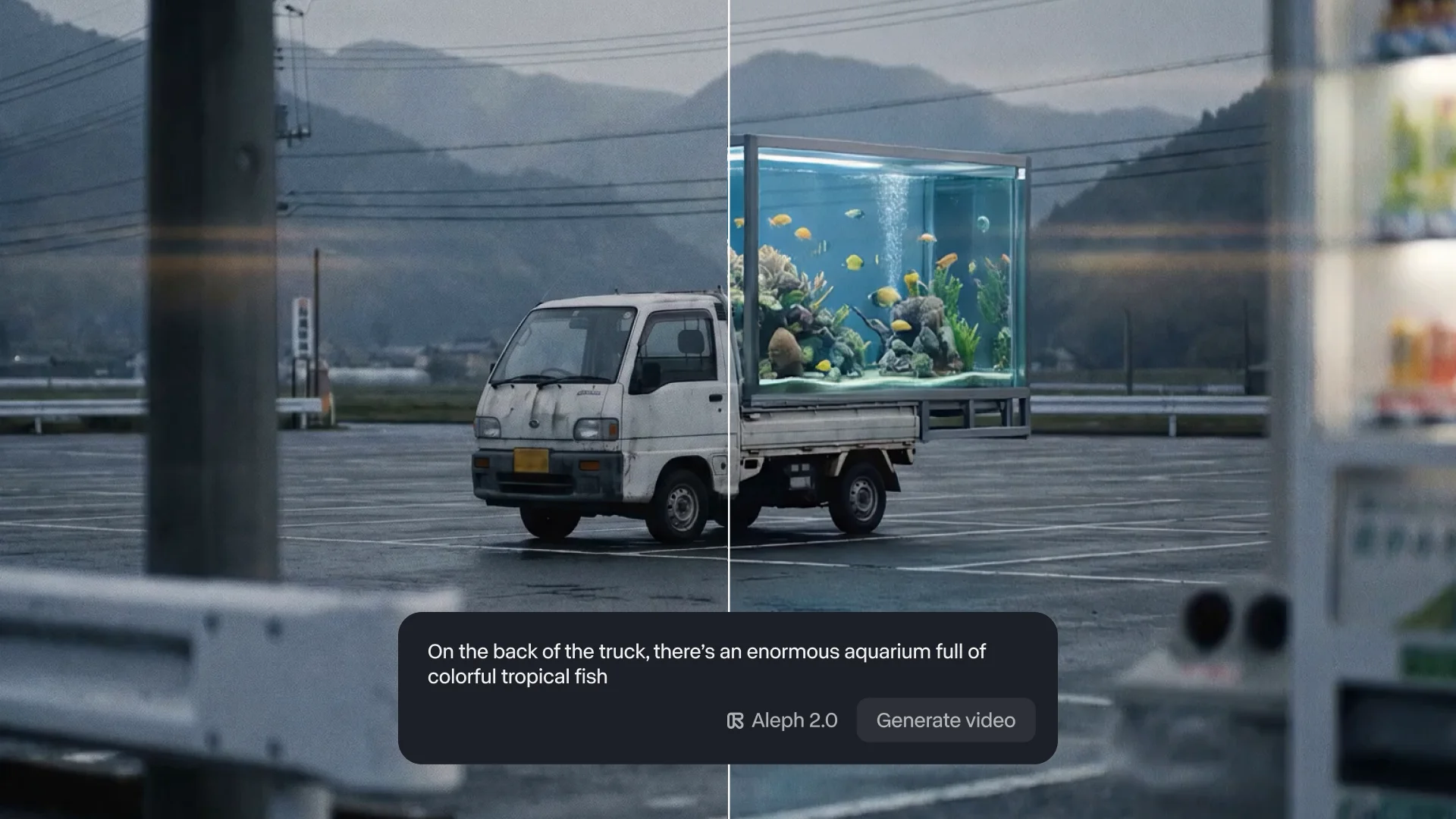
Dated evidence: Runway published “Introducing Aleph 2.0 and Edit Studio” on May 21, 2026. The company says Aleph 2.0 is an upgrade to its flagship video editing model, supports edits on clips up to 30 seconds at 1080p, preserves the input video while making localized changes, accepts image-level control over video edits, and can apply edits across multiple shots. Runway says Aleph 2.0 in Edit Studio is available now on paid plans.
Why it matters for AI film and advertising: most commercial teams already have footage, product shots, approved seasonal assets, creator videos, and rough cuts. The higher-value problem is not always generating a new scene; it is changing the product color, cleaning the background, shifting the lighting, or making a seasonal version without rebuilding the whole film. That puts Aleph 2.0 closer to a campaign ops tool than a demo generator.
Workflow dependency map: input footage, approved reference frame, allowed edit scope, legal review for product truth, and editor sign-off on shot continuity.
Production impact estimate: for 15- to 30-second social cutdowns, targeted video editing can plausibly remove one reshoot or roto-style cleanup request from a revision cycle. The savings are strongest when the requested change is local and the original performance or camera move needs to stay intact.
Decision now: test Aleph 2.0 against one real edit request from the last month: product swap, background cleanup, lighting correction, or seasonal restyle. Score it on preservation, review time, and whether the result survives client scrutiny.
Source: Runway, Introducing Aleph 2.0 and Edit Studio (May 21, 2026) →
2) Google Asset Studio connects generative creative to ad testing
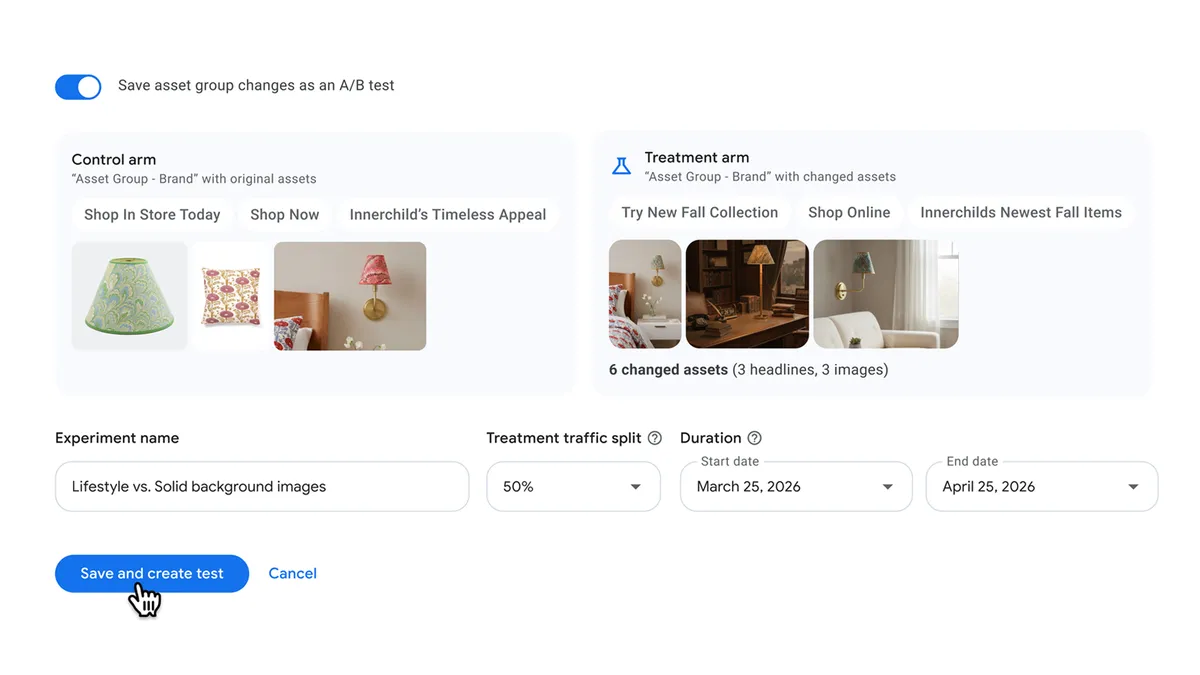
Dated evidence: on May 20, 2026, Google said Asset Studio is gaining new multimodal capabilities inside Google Ads. The update says Asset Studio can use the marketing brief, brand guidelines, website, and goals to generate assets across creative themes and asset types, refine them with natural language, build video assets with Gemini Omni, and test creative with 1-Click A/B Testing. Google says the features are rolling out globally in English this summer.
Why it matters for advertising teams: this is the ad-platform version of the same shift: generative AI is being embedded closer to media activation and performance testing. For agencies, that means the asset pipeline needs to carry claims, product details, and brand limits in machine-readable form, because the platform will increasingly use those inputs to propose and test variants.
Workflow dependency map: brand guidelines, product feed accuracy, landing-page truth, media objective, test hypothesis, and approval rules for AI-generated variants.
Production impact estimate: once brand inputs are clean, a campaign team could turn one master route into a testable asset set in a day instead of waiting for a separate adaptation sprint. The weak point is not generation speed; it is whether approvals and measurement naming keep up.
Decision now: rebuild briefs as ad-system inputs: target audience, mandatory product facts, prohibited claims, preferred frame ratios, copy boundaries, and the one result each creative variant is meant to test.
Source: Google Ads, Asset Studio multimodal capabilities (May 20, 2026) →
Source: Google Marketing Live 2026 announcement collection (May 20, 2026) →
3) Google Flow and Gemini Omni turn AI video into a managed creative surface
Dated evidence: Google published Flow updates on May 19, 2026, describing new agents, mobile apps, and Gemini Omni for Google Flow and Flow Music. Google positions Flow as a creative collaborator and says Gemini Omni brings stronger multimodal creative control across Flow and Flow Music.
Why it matters for AI filmmaking: the practical story is not just a new model name. Flow is becoming a place where video direction, image generation, and music direction share context. For commercial producers, that matters because the same campaign route needs to travel through storyboard, motion test, audio direction, and approvals without becoming four disconnected prompt histories.
Workflow dependency map: script beats, reference imagery, scene continuity notes, music direction, rights-safe source assets, and approval criteria for generated video and audio.
Production impact estimate: a managed video-and-music workspace can reduce context loss during pre-vis. For treatments, pitch films, and social route testing, expect the biggest gain in fewer rebuilds between visual exploration and sound direction, not in final-client-ready footage on the first pass.
Decision now: make each AI video route carry three linked artifacts: visual reference, motion brief, and audio mood. Treat the prompt history as production metadata, not disposable scratch work.
Source: Google Labs, Flow and Flow Music updates (May 19, 2026) →
4) Stable Audio 3.0 raises the bar for campaign sound generation
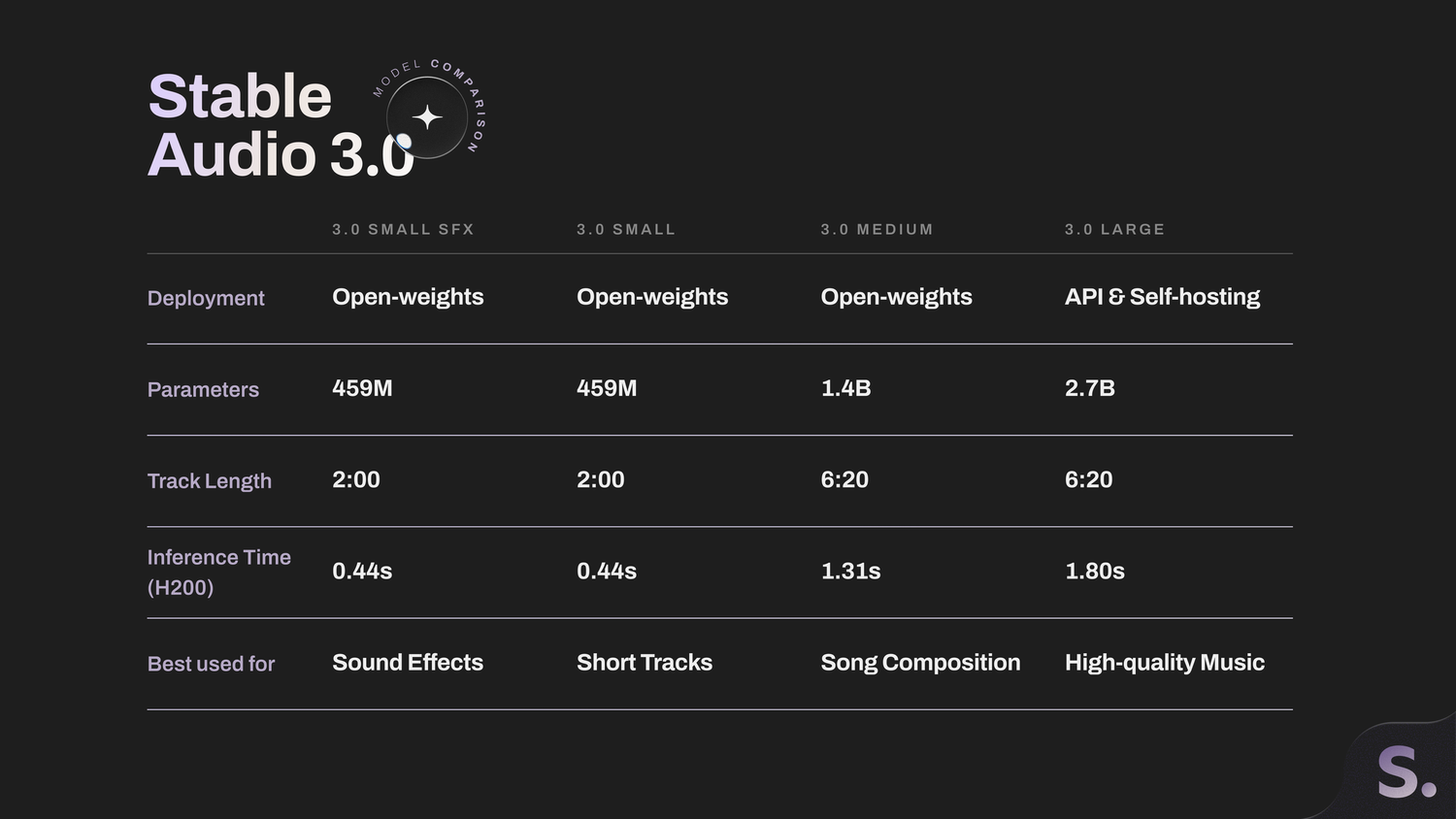
Dated evidence: Stability AI published its Stable Audio 3.0 announcement on May 20, 2026. The company says the model family is trained on fully licensed data, includes open-weight options, lets users own and commercialize outputs under the Stability AI Community License or Enterprise License, and adds variable-length generation up to more than six minutes. The launch names Stable Audio 3.0 Small SFX, Small, Medium, and Large, with Small SFX and Small designed for on-device generation.
Why it matters for film and advertising: AI sound has been the easiest part of a generative film workflow to treat as a placeholder. That is changing. When music and sound-effect models become more capable and more deployable, audio direction can move earlier into pre-vis, pitch films, and social variant testing. The result is better pacing decisions before the picture lock conversation starts.
Workflow dependency map: music brief, brand tone, rights policy, disclosure standard, platform usage rights, and edit timing for cue placement.
Production impact estimate: for short-form advertising, stronger sound generation can remove one temporary-music search loop and give creative directors a more accurate feel for rhythm on first review. Rights and licensing checks still determine whether generated sound can move from pre-vis to final delivery.
Decision now: add audio intent to every AI video brief: tempo, emotional arc, prohibited genres, sonic logo constraints, and whether the output is for exploration or final-use consideration.
Source: Stability AI, Stable Audio 3.0 announcement (May 20, 2026) →
Risk to live campaigns this week
| Workflow area | Primary dependency | Brand/legal risk | Delivery impact |
|---|---|---|---|
| Editable AI video | Source footage, reference frame, allowed edit scope | Moderate: product truth and continuity can drift after local edits | High for cutdowns, cleanup, seasonal variants, and pitch pre-vis |
| Multimodal ad production | Brand guidelines, website truth, media goal, test plan | Moderate-high: AI variants can scale weak claims quickly | High if approval labels and A/B naming are ready |
| Managed video workspace | Prompt history, scene references, motion notes, audio mood | Moderate: disconnected approvals can bless the wrong route | Medium-high for pitch films, pre-vis, and route exploration |
| AI music and sound | Music brief, rights policy, platform usage boundary | High: licensing, similarity, and disclosure need a clear standard | Medium-high for early pacing and internal route review |
Operator checklist for next sprint
- Video: run one footage-edit test where the original performance must stay intact.
- Ads: convert campaign briefs into structured inputs that an ad platform can generate and test from.
- Flow: keep visual, motion, and music prompts attached to the same route so approvals follow the work.
- Sound: define whether generated audio is exploratory, temp, or final-use before it enters review.
We can map model, platform, and workflow changes to your active campaign slate, then turn them into a practical sprint plan for AI film and advertising teams.
Sources
- Runway: Introducing Aleph 2.0 and Edit Studio (May 21, 2026)
- Google Ads: Asset Studio multimodal capabilities (May 20, 2026)
- Google Marketing Live 2026 announcement collection (May 20, 2026)
- Google Labs: New agents, mobile apps and Gemini Omni for Google Flow and Flow Music (May 19, 2026)
- Stability AI: Meet Stable Audio 3.0 (May 20, 2026)