The short answer
Vertical drama is a scripted series format made for smartphones. Episodes are usually one to three minutes long, shot or finished in 9:16 portrait format, and arranged into a longer season of 20, 50, 80 or even 100 short instalments. The same category is also called micro drama, short drama, vertical micro drama, mobile drama, vertical series or, in China, duanju.
The format sits between TikTok, soap opera, romance fiction, mobile gaming and performance marketing. It is not simply TV cut into smaller pieces. A vertical drama is written around the behaviour of someone holding a phone: quick comprehension, emotional escalation, continuous cliffhangers, paid unlocks or ad-funded continuation, and fast feedback from audience data.
That is why the best vertical drama producers think in systems. The story, thumbnail, episode break, platform, payment model, paid social creative, localisation route and audience analytics all shape the same product.
Where vertical drama originated
The modern vertical drama industry originated in China, where short-video platforms, web-fiction IP, mobile payments, fast production bases and high-volume serial storytelling came together. Chinese audiences already had a deep culture of serialized online fiction, especially romance, revenge, fantasy, billionaire, werewolf, rebirth and family-status stories. Vertical drama turned those readable hooks into filmed mobile episodes.
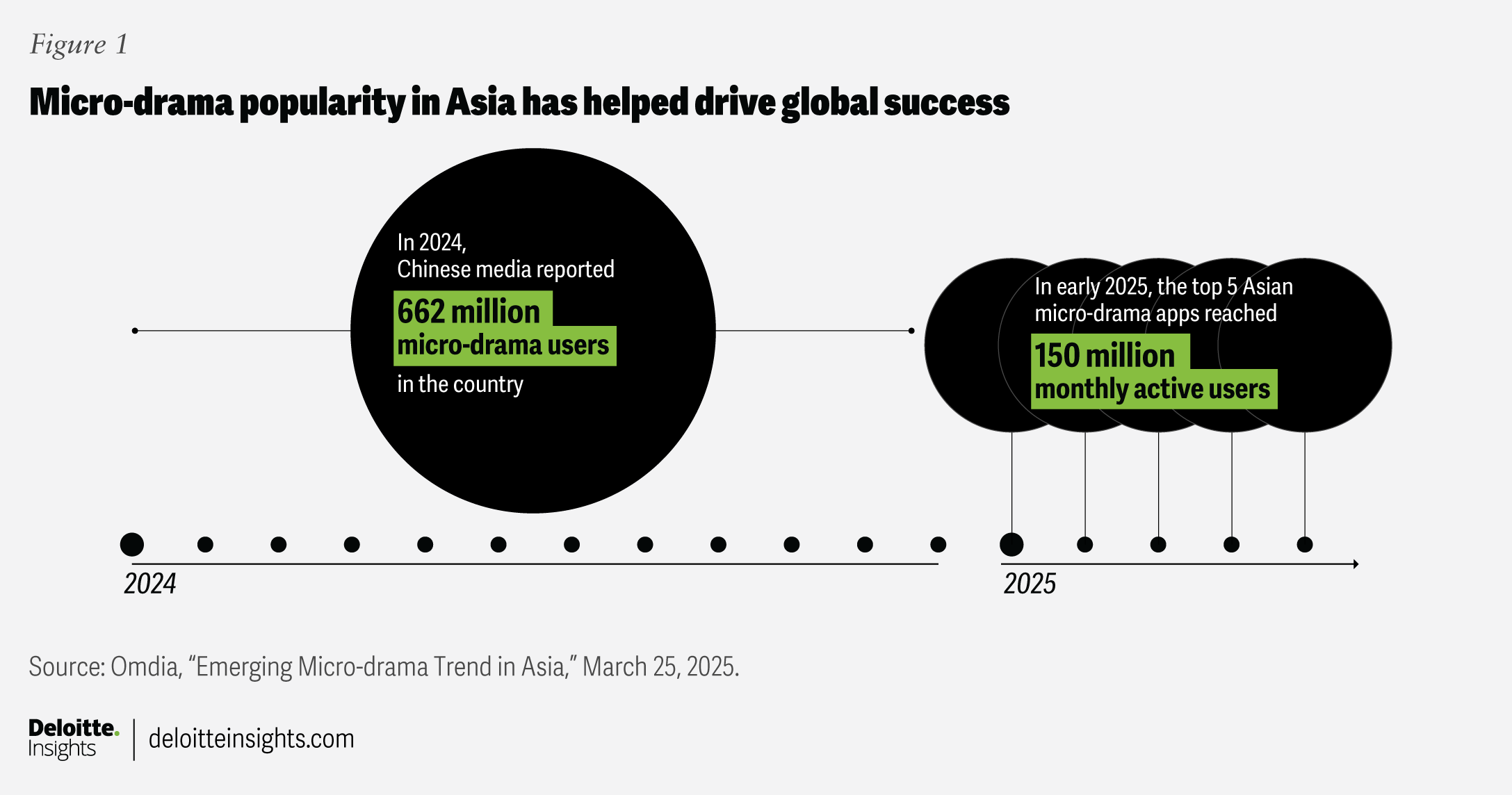
Deloitte notes that Chinese micro-dramas had reached roughly 662 million users in 2024, while large platforms such as iQiyi offered thousands of free and paid micro-dramas. Distribution developed across Douyin, Kuaishou, WeChat Video Accounts and other platform ecosystems, with free discovery, paid unlocks, advertising and e-commerce all in the mix.
The production model also changed. China built compact vertical production clusters with repeatable sets: mansions, hospitals, offices, banquet halls, subway platforms and bedrooms. That reduced setup time and made it possible to produce large volumes quickly. Xinhua/Qiushi coverage described one Zhengzhou base with more than 50 sets across just over 10,000 square metres, serving more than 2,600 production teams since trial operation in April 2025.
How vertical drama works
Vertical drama works because it reduces the time between premise, emotion and consequence. The viewer does not wait ten minutes for a story to start. The first episode often begins with a betrayal, inheritance reveal, pregnancy shock, fake marriage, secret identity, workplace humiliation, supernatural bond or revenge trigger. Every scene has to carry an obvious emotional task.
The format has a few common mechanics:
- Instant genre recognition: titles, thumbnails and first lines make the promise obvious.
- Status conflict: characters gain, hide, lose or reveal power quickly.
- Compressed scenes: there is little room for slow setup or atmospheric filler.
- Cliffhanger architecture: each episode break is a continuation trigger.
- App-native monetisation: users may watch early episodes free, then unlock later episodes with coins, subscriptions, ads or bundles.
- Paid acquisition feedback: trailers, thumbnails and first episodes are tested like performance creative.
That is also why some vertical dramas feel exaggerated. The form rewards emotional clarity. A secret billionaire, a fake wife, a wrong brother, a hidden heir or a supernatural mate is not just melodrama; it is a fast way to establish desire, danger, status and an unresolved question.
How well is it working?
The numbers are no longer fringe. Deloitte predicts in-app revenue for micro-series content will rise from a forecast US$3.8 billion in 2025 to US$7.8 billion in 2026. The same report points to global micro-drama app revenue moving from US$178 million in Q1 2024 to nearly US$700 million in Q1 2025.
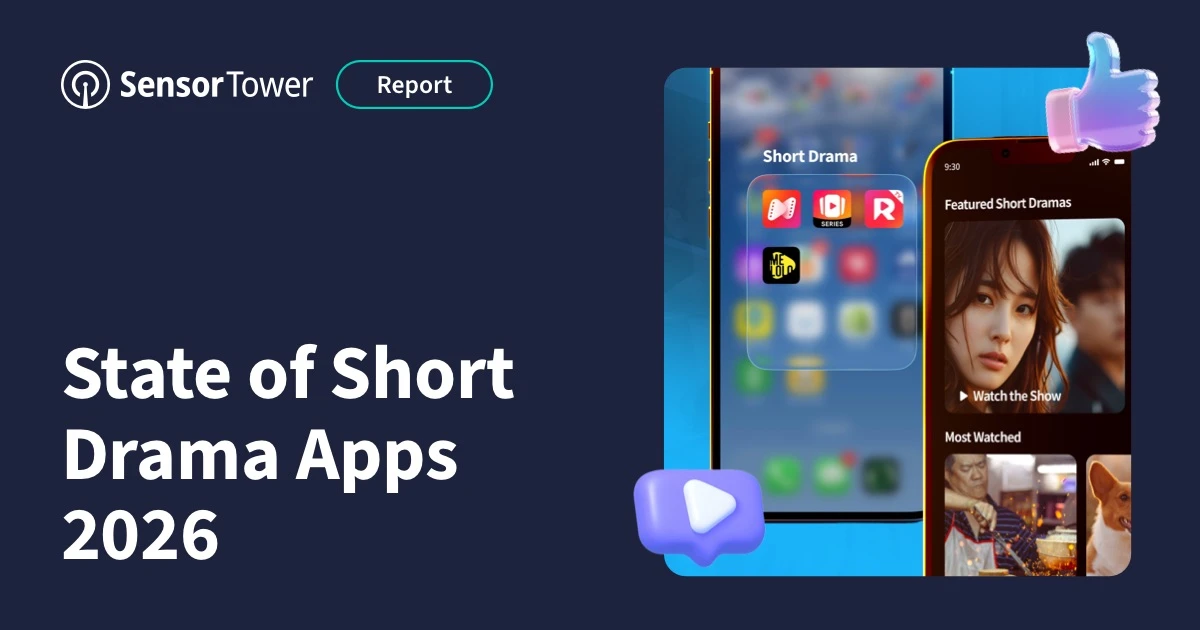
Sensor Tower reported that short-drama app downloads surged by 320 million year over year in 2024, with DramaBox, ShortMax and ReelShort accounting for 76% of downloads. It also found the United States contributed 60% of global mobile revenue for the category in 2024, followed by Japan and Indonesia. Paid acquisition was central: Sensor Tower reported paid downloads accounted for more than 60% of total downloads for DramaBox and ShortMax, and 70% for ReelShort in 2024.
The category is also expanding in India and Southeast Asia. Sensor Tower's India Q1 2026 analysis reported short-drama app downloads up 403% year over year, with FreeReels, Story TV and Kuku TV entering multiple Top 10 positions. FreeReels grew downloads 520% quarter over quarter, supported by a more than fivefold increase in digital ad spend, and Sensor Tower described the audience as 70% under 34 with a relatively balanced gender mix.
Put simply: vertical drama is working because it has found a commercial loop that traditional TV does not have. It can identify an audience through paid social, test a hook quickly, push viewers into an app, monetise continuation, localise winners and reinvest learning into the next slate.

Who watches vertical drama?
The early global centre of gravity has been romance, fantasy, family, revenge and wish-fulfilment audiences, especially viewers already comfortable with web fiction, soap operas, fan fiction, K-drama, C-drama, romance novels and short-video feeds. Many of the biggest titles are built around female-led emotional stakes: betrayal, humiliation, secret power, second chances, protective lovers, family pressure and revenge.
But the audience is widening. Deloitte's March 2025 US consumer survey found about 30% of Gen Z and millennials were familiar with micro-series or micro-dramas, and among those familiar, nearly half were watching more than they did a year earlier. Sensor Tower's India data points to younger users, while its global work highlights overlap with mobile gaming audiences in markets such as the US and Brazil.
That gives the category several audience lanes:
- Romance and fantasy readers who want familiar tropes turned into fast video.
- Short-video natives who are used to rapid emotional payoff and vertical viewing.
- Commuters and fragmented-time viewers who want story without a 45-minute commitment.
- Mobile gamers who understand coins, unlocks, daily rewards and app events.
- Local-language audiences in India, Southeast Asia, Latin America and other growth markets.
Who is adapting the format?
The first wave was specialist apps: ReelShort, DramaBox, ShortMax, GoodShort, NetShort, FlickReels, MyDrama, Vigloo, Kuku TV, FreeReels, Story TV and others. The second wave is broader: streamers, Hollywood producers, retailers, brands, creator studios and local entertainment platforms.
In the US, Business Insider reported that Peacock licensed 10 micro dramas from ReelShort for its mobile app and planned Bravo original micro dramas for summer 2026. That is a useful signal: legacy streamers are not only watching the category, they are testing vertical serial behaviour inside their own mobile products.
Retail media is adapting too. In June 2026, Marketing Dive reported that Procter & Gamble and Albertsons Media Collective built Rico's Tacos, a scripted mobile-first microdrama distributed through Albertsons channels with product appearances and shop-the-series functionality. That points to a future where vertical drama is not only entertainment IP, but shoppable story inventory.
India is adapting through local app ecosystems. Sensor Tower identified FreeReels, Story TV and Kuku TV in the short-drama surge, and Deloitte India has noted multiple active micro-drama apps in the market. The opportunity is not simply translating Chinese or US hits; it is building local stories around local aspiration, family dynamics, humour, celebrity, music and price sensitivity.
Why the format is interesting for producers
Vertical drama changes the production question. Traditional development asks whether a show has a compelling pilot, recognisable talent, marketable IP and a full-season arc. Vertical drama asks whether the first 20 seconds create enough emotional debt to earn the next tap.
That changes how producers think about craft:
- Writing: scenes need one job, one escalation and one unanswered question.
- Casting: faces and chemistry need to read instantly on a small screen.
- Blocking: vertical framing rewards proximity, eye lines, reaction and status positioning.
- Scheduling: repeated sets and compressed company moves matter more than scale.
- Post: subtitles, sound, pacing and episode endings carry conversion weight.
- Marketing: trailer variants and paid hooks are part of development, not an afterthought.
That does not mean the format has to stay low-quality. The commercial reason it exists is speed and iteration. The creative opportunity is to use that system to build better mobile-first IP, not just louder cliffhangers.
How AI can help vertical drama production
AI can help at almost every stage of a vertical drama pipeline, but the strongest use cases are not the most obvious. The goal is not "make a whole show with AI" by default. The goal is to reduce test cost, compress planning, localise faster and expand what a small team can attempt.
| Stage | AI can help with | Human control point |
|---|---|---|
| Research | Tropes, titles, comments, app charts, ad hooks, market gaps | Choose the audience promise, not just the loudest trope |
| Development | Logline variants, character secrets, reveal ladders, cliffhanger maps | Protect motivation, taste and cultural specificity |
| Scripting | Cold opens, alternate endings, recap-free exposition, localisation passes | Rewrite for performance, subtext and rhythm |
| Pre-production | Schedules, set clusters, props, wardrobe, shot lists, continuity checks | Confirm feasibility with director and producer |
| Production support | Animatics, synthetic inserts, fantasy shots, phone screens, VFX tests | Maintain consent, actor rights and editorial judgement |
| Localisation | Translation, subtitles, dubbing, lip-sync, title testing, market metadata | Review status, shame, flirtation, humour and legal risk locally |
| Testing | Trailer variants, thumbnail options, paid hooks, episode-one cuts | Avoid overfitting the next story to one noisy metric |
AI-native production is already moving into the category. C21Media reported that Vigloo released Bloodbound Luna, a 22-episode English-language vertical drama produced using AI in eight weeks by fewer than 10 people. The same report says the series is part of Vigloo's plan to produce roughly 30% of its annual slate using AI-driven studio workflows, including animation.

The AI upside and the AI trap
The upside is clear: a smaller team can test more premises, visualise worlds earlier, plan more efficiently, localise faster and create fantasy or effects-heavy material that would otherwise be too expensive. The Next Web described China's AI micro-drama sector as a mass commercial application of AI-generated video, with AI-native titles arriving at huge volume and costs falling sharply in certain workflows.
The trap is also clear. If AI makes production cheaper, the market will fill with more similar stories, similar faces, similar lighting and similar cliffhangers. Volume alone will stop being a moat. The better advantage is a hybrid system: AI for speed, testing, versioning and scale; humans for taste, emotion, casting, performance, cultural judgement and rights management.

What makes a strong vertical drama idea?
A strong vertical drama idea has three qualities:
1. It can be understood immediately. The audience should know the genre, conflict and promise before the first episode ends. If the pitch needs a paragraph to explain, it may be too slow for the format.
2. It produces repeatable reversals. Vertical drama needs more than a twist. It needs a machine for twists: secrets, status shifts, betrayals, public reveals, forced choices, hidden identities, social pressure and emotional debt.
3. It can be produced economically. The best concepts use repeatable sets, contained casts, high-emotion scenes and a production route that matches the budget. Expensive scale is possible, but the format rewards clarity before spectacle.
That is why vertical drama is not only a content trend. It is a production discipline. It forces teams to connect audience, story, platform, format and commercial model earlier than traditional development usually does.
What should brands and studios do with it?
Brands should not simply copy werewolves, billionaires and revenge marriages. The useful lesson is structural: build a repeatable story system around a human problem, then test whether people want the next beat. A sports brand might build a rivalry. A retailer might build a family comedy around weekly shopping pressure. A fashion brand might build status and transformation. A finance brand might build suspense around hidden risk or ambition. The format is flexible if the hook is clear.
Studios should treat vertical drama as an IP testing environment. Instead of betting everything on a full-length pilot, develop a world, test titles and hooks, produce a short run, read the audience signal, then scale the premise that earns continuation. AI can make that loop faster, but the loop still needs human taste.
For Vertical Haus, the opportunity is clear: vertical drama sits exactly where mobile-first storytelling, AI-hybrid production, audience testing, owned IP and social distribution meet.
Vertical drama FAQ
Is vertical drama the same as micro drama?
Usually, yes. The terms are often used interchangeably. "Vertical drama" emphasises the 9:16 phone-native format. "Micro drama" emphasises short episodes and compressed serial storytelling.
Is vertical drama only romance?
No. Romance, werewolf, billionaire, revenge and family-status stories are highly visible because they convert quickly, but the format is expanding into fantasy, thriller, comedy, branded entertainment, shoppable retail media, YA, animation and local-language originals.
Does AI replace actors in vertical drama?
Sometimes, especially in AI-native fantasy, animation and synthetic workflows. But many strong vertical dramas still rely on real actors, chemistry and cultural nuance. The practical future is hybrid: AI-assisted development, production and localisation around human-led story decisions.
How should a new vertical drama project start?
Start with audience, genre promise, emotional hook, episode-one cliffhanger, production route, localisation plan and test budget. The concept should be written for continuation before it is written for scale.
Vertical Haus builds AI-assisted production routes for TikTok-first scripted series, micro-drama pilots, audience testing, localisation and owned-IP development.
Sources
- Deloitte: Tiny episodes, massive appeal: Short-form serials are on the rise
- Sensor Tower: State of Short Drama Apps 2026 Report
- Sensor Tower: Short-drama redefines mobile entertainment and challenges games
- Sensor Tower: India mobile app market Q1 2026
- Xinhua/Qiushi: China's micro-drama boom meets AI
- C21Media: Vigloo unveils YA microdrama made in eight weeks with AI
- The Next Web: China's AI micro-drama production boom
- Business Insider: Peacock licensing ReelShort micro dramas
- Marketing Dive: P&G and Albertsons branded microdrama