
Weekly signal table
| Trend | Confidence | Commercial read |
|---|---|---|
| AI answers turn offer pages into recommendation inputs | High | Shopify reports AI-search orders up 13x year over year, while the Atlantic flagged rising manipulation of AI recommendations |
| Conversational ads reward intent-matched sales content | Medium-high | OpenAI now documents ad delivery, bidding and conversion measurement around conversational context |
| CRM agents move into live qualification and routing | High | Salesforce's June marketing-agent release puts SDR qualification, prospecting and Slack campaign management into the revenue workflow |
| Content architecture becomes conversion infrastructure | High | Salesforce's Contentful deal shows structured content becoming the substrate for AI-assembled buyer journeys |
| Creator demand gets measured like paid media | High | CreatorIQ and L'Oreal/Meta evidence points to creator content as a performance channel, not only an awareness tactic |
1) AI answers are turning offer pages into recommendation inputs
What changed this week: Shopify's June 1 AI regulation article put hard commerce data behind the AI-search shift: orders coming to Shopify merchants from AI search are up 13x year over year, with a 49% higher conversion rate than traditional search and 14% higher average order value. On June 10, The Atlantic gave the darker side a name: brands and publishers are trying to influence chatbot recommendations with machine-targeted listicles, comparison pages and recommendation bait.
Why it matters commercially: AI search is not only a traffic source. It is becoming a recommendation layer before the buyer ever sees your website. That means offer clarity now has two jobs: persuade the human buyer and provide enough structured, defensible information for answer engines to understand when your offer is the right fit. Weak positioning, vague comparison pages and thin proof make the business invisible or easy to misrepresent.
Apply now: Rewrite your top revenue pages around buyer-fit truth. State who the offer is for, who it is not for, the problem it solves, the measurable proof, the tradeoffs, the pricing or qualification logic, and the next step. Add product or service schema, FAQ schema, named customer proof, comparison criteria, and a plain-language "best for" section. Treat every claim as something an AI assistant may quote back to a buyer.
What not to automate yet: Do not flood the web with self-serving listicles unless the claims are true and useful. AI-assisted growth that wins recommendations but creates buyer disappointment will damage the revenue engine downstream.

2) Conversational ads are pushing sales content closer to measurement
What changed this week: OpenAI's updated Ads in ChatGPT basics explains how advertisers can reach users as they explore, compare and decide in one conversational experience. The documented format includes advertiser name, logo, headline, copy, landing page and image asset. Delivery considers conversation intent, context hints, landing page, ad title and ad copy; reporting includes impressions, clicks, spend, CTR, average CPC, average CPM and conversions.
Why it matters commercially: Keyword-era landing pages were often built around search terms. Conversational ads need pages that answer the buyer's live question. If a user is comparing revenue engine partners, conversion systems or offer-clarity help, the page cannot be a generic services brochure. It needs specific sales content that mirrors the buyer journey, handles objections and gives analytics enough clean signal to improve.
Apply now: Build a conversion path for each high-intent conversation cluster. Use one headline, one proof block, one comparison section, one objection-handling FAQ and one diagnostic CTA per cluster. Then wire UTM parameters, server-side conversion events and CRM source fields before scaling. The goal is not only more clicks; it is cleaner intent, cleaner follow-up and cleaner learning.
What not to automate yet: Do not let AI write ad copy disconnected from the destination page. Conversational context can earn the click, but the landing page still has to make the offer feel specific, credible and immediately useful.

3) CRM agents are moving into live qualification and routing
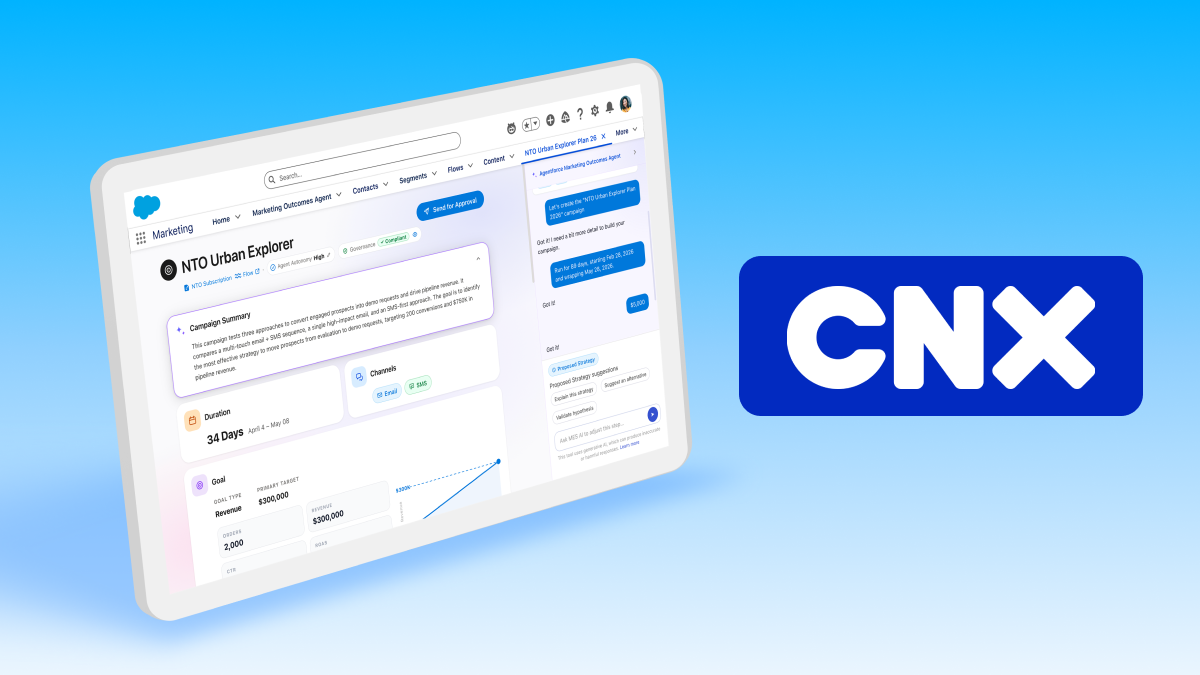
What changed this week: Salesforce's June 3 agentic marketing team announcement put agents directly into pipeline work. Piper, Qualified's AI SDR Agent, is generally available and is positioned to identify and qualify website visitors in real time, answer questions, understand buyer intent and route prospects into sales interactions. Hunter, a prospecting agent, is also generally available. Campaign management in Slack using MCP is listed for June 2026.
Why it matters commercially: Lead capture is becoming a live conversion system. The old model waited for a form, then waited for sales, then hoped context survived the handoff. A stronger revenue engine qualifies intent while the buyer is still active, routes the right opportunities quickly and gives the human seller better context. This is where AI-assisted growth becomes operational rather than cosmetic.
Apply now: Map the first 15 minutes after a qualified visitor arrives. Define what the site knows, what the CRM knows, what the agent may ask, what disqualifies the lead, what triggers human handoff and what gets written back to the opportunity record. Then test the follow-up sequence with real objections: budget uncertainty, unclear authority, competing vendors, timing and legal/security concerns.
What not to automate yet: Do not route on chat enthusiasm alone. Qualification should include fit, urgency, authority, use case, risk and potential value. Otherwise the agent creates activity, not pipeline.
4) Content architecture is becoming conversion infrastructure
What changed this week: Salesforce signed a definitive agreement to acquire Contentful on June 1. The company says Contentful will add a native content layer to Headless 360, connecting customer data with content experiences and allowing Agentforce to dynamically assemble personalised experiences across channels. The commercial signal is clear: content is being treated as structured revenue infrastructure, not a folder of assets.
Why it matters commercially: Buyer journeys are increasingly assembled from modules: product facts, proof points, objections, use cases, testimonials, comparison logic, pricing language, compliance-safe claims and CTAs. If those modules are messy, AI personalisation scales confusion. If they are structured, they can support sales content, landing pages, nurture, ads, outbound and customer education from the same commercial story.
Apply now: Create a revenue content library before trying to personalise at scale. Tag every module by buyer stage, persona, offer, objection, proof type, claim status, channel and CTA. Identify missing modules against the questions sales hears every week. Then let AI recommend, assemble and localise from governed content rather than inventing from scratch.
What not to automate yet: Do not connect agents to an ungoverned content pile. Outdated claims, mixed positioning and conflicting offers will move faster, but they will not convert better.
5) Creator-led demand is being measured like paid media
What changed this week: CreatorIQ's June 10 Creator-Powered Funnel report says creator content now accounts for 44% of paid media creative assets on average, 92% of paid media leaders use creator content in paid media, and more than eight in 10 respondents report at least 2x ROI from creator programs. The same week, coverage of a WARC, L'Oreal and Meta measurement framework reported creator-led campaigns generating 35% higher ROI than campaigns without creators.
Why it matters commercially: Creator content is no longer only a brand-awareness bet. It is becoming a performance creative supply chain, landing-page asset source and trust layer inside paid media. The buyer psychology shift is important: people do not just want polished claims from a brand; they want credible interpretation from someone who understands the use case. That makes creator selection a positioning decision, not just a media decision.
Apply now: Brief creators from the revenue engine, not the campaign calendar. Give them the buyer problem, the offer promise, the proof, the objections and the disqualifiers. Measure creator output by qualified traffic, assisted conversion, sales-content reuse, landing-page lift, pipeline influence and buyer-fit engagement. For B2B and high-consideration services, a smaller creator with clear category authority can beat a larger account with generic reach.
What not to automate yet: Do not use AI to sand down creator voice into generic brand copy. The commercial value is trust transfer. If the story sounds like anyone could have posted it, it stops doing the job.

7-day revenue engine action queue
- Offer clarity: Update one core offer page so AI assistants and human buyers can understand best fit, proof, tradeoffs and next action.
- Sales content: Build five reusable modules: comparison logic, objection handler, proof block, diagnostic CTA and pricing/qualification explainer.
- Conversion systems: Instrument one conversational ad or AI-search landing path with UTM, conversion event and CRM source fields.
- Demand generation: Score this week's creator or social engagement by buyer fit, not total reactions, and route warm-fit accounts into follow-up.
- Commercial storytelling: Turn one customer story into modular proof that can support ads, landing pages, outbound, nurture and sales calls.
Vertical Haus helps teams sharpen offer clarity, build sales content, design conversion systems, route demand and turn commercial storytelling into measurable buyer movement.
Sources
- Shopify: AI unlocks future-proof entrepreneurs, June 1, 2026
- The Atlantic: Your Search Results Are Getting Sloptimized, June 10, 2026
- OpenAI Help Center: Ads in ChatGPT basics, updated June 2026
- Salesforce: AI marketing team announcement, June 3, 2026
- Salesforce: Contentful acquisition agreement, June 1, 2026
- CreatorIQ: Creator-Powered Funnel report, June 10, 2026
- Communicate: L'Oreal creator-led campaigns generate 35% higher returns, June 10, 2026
- Pinterest Business: 2026 Marketing Moments Guide, planning-window context