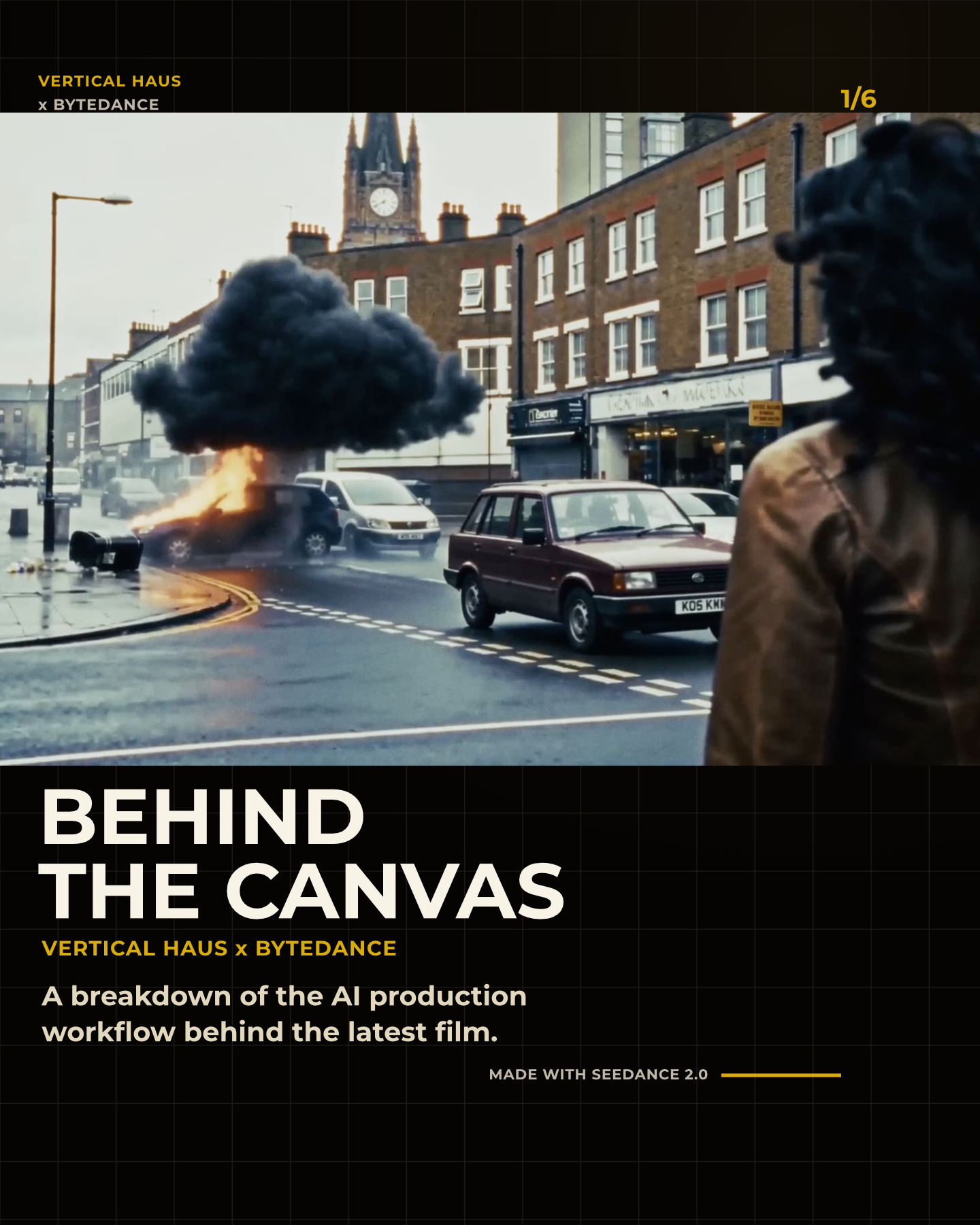
The new Vertical Haus x ByteDance partnership film uses Seedance 2.0 to show what happens when AI filmmaking is treated as a production discipline, not a novelty prompt. The opening business problem was clear: brands want cinematic AI video commercials and generative video production that can keep pace with social calendars, but they still need authorship, continuity, and a reason to care.
The answer was a short film about control. A weather-room operator makes choices that become cinematic cause and effect on the street outside. That gave the workflow a natural test: could the system hold a world, connect assets, preserve story rhythm, and turn interface logic into emotional action?
1) The brief: make the weather feel built
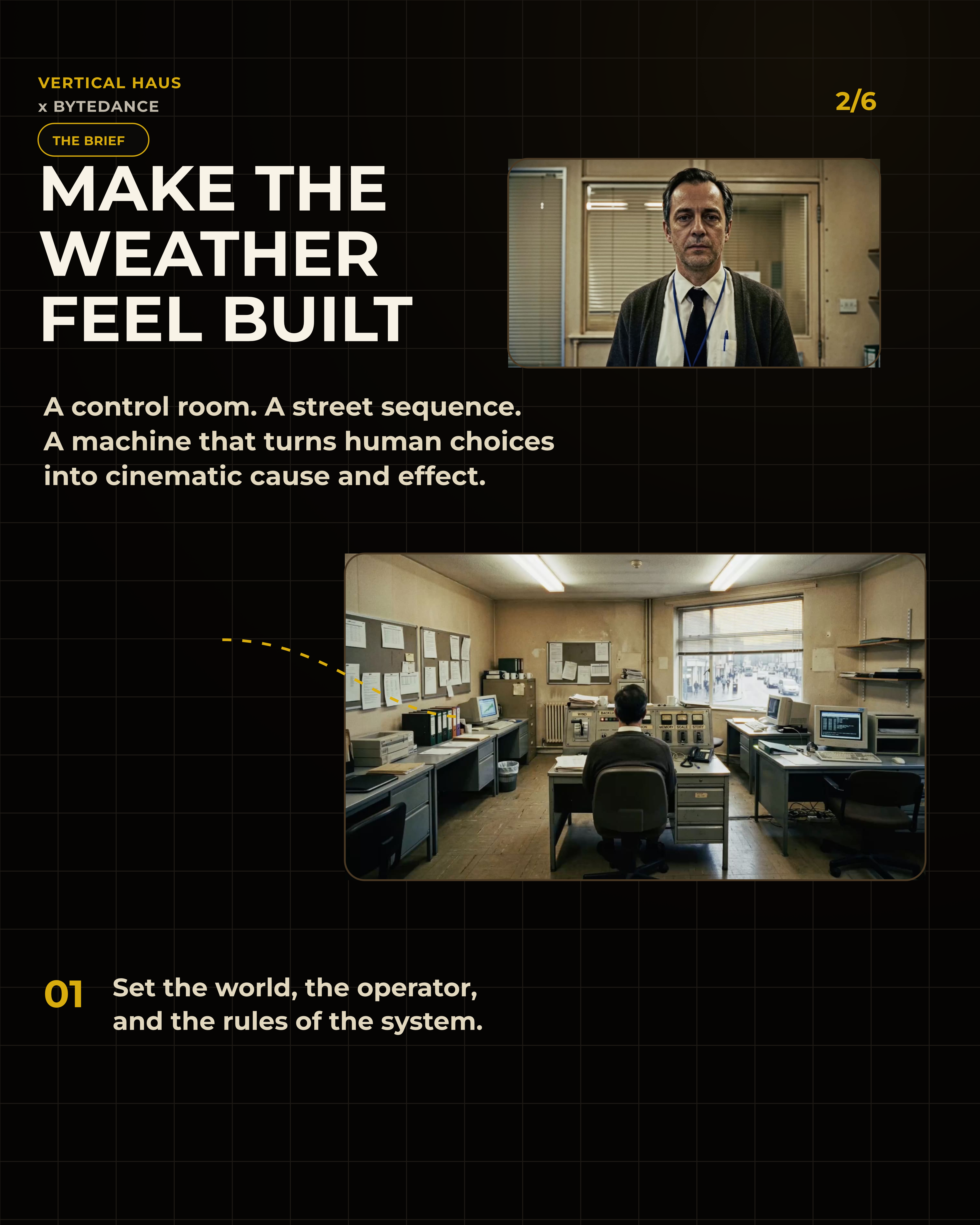
The first creative move was to define the world before chasing spectacle. A control room, a street sequence, and a machine that translates human decisions into weather gave the film a clean operating idea. That matters for AI ad creation because the prompt is only useful when it is subordinate to a dramatic rule.
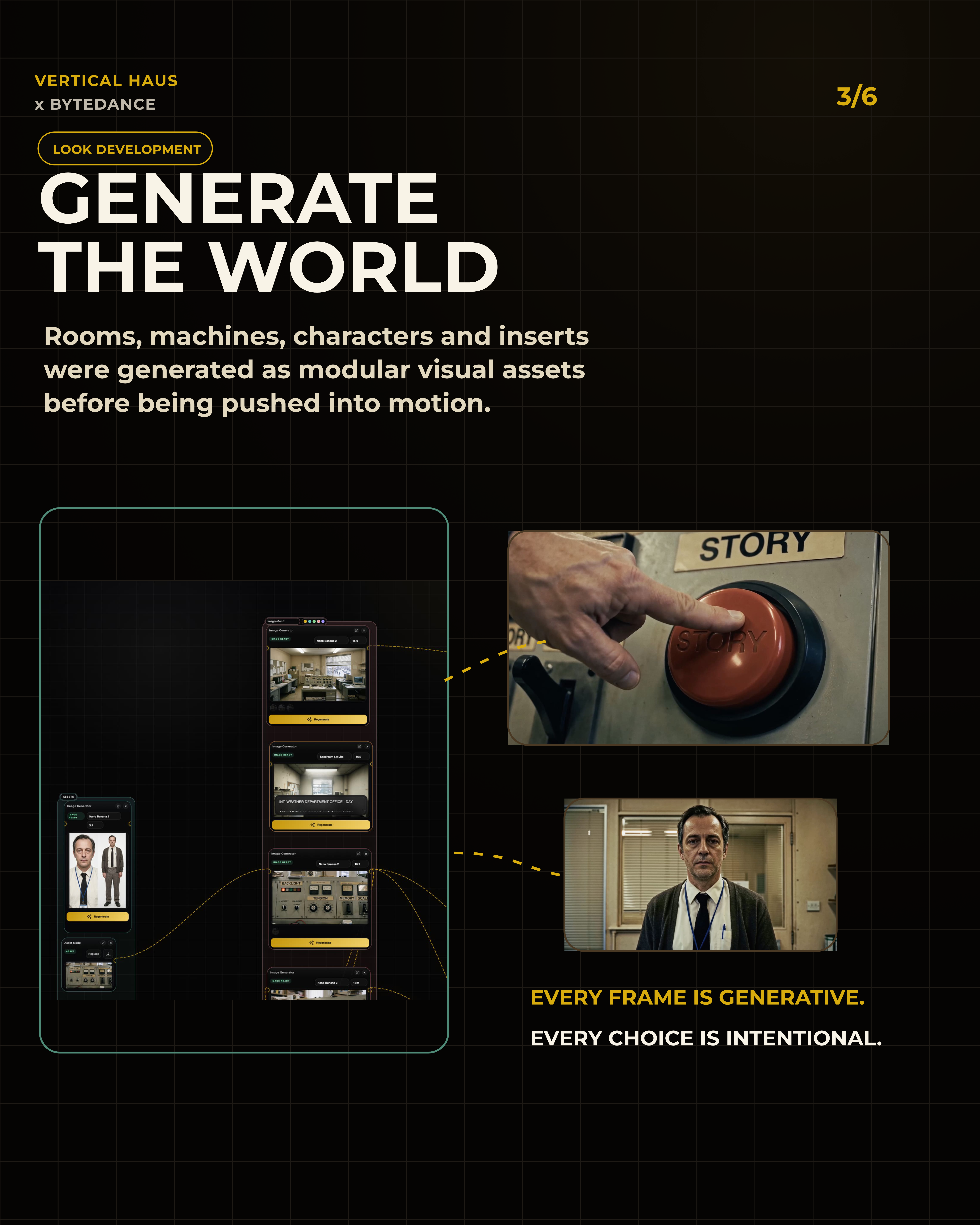
2) Look development: generate the world before the move
Rooms, machines, characters, and inserts were generated as modular visual assets before they were pushed into motion. This kept the film from feeling like unrelated clips. For an AI advertising agency workflow, that asset-first discipline is the difference between a demo and campaign-ready production.
3) Motion canvas: from prompt to system
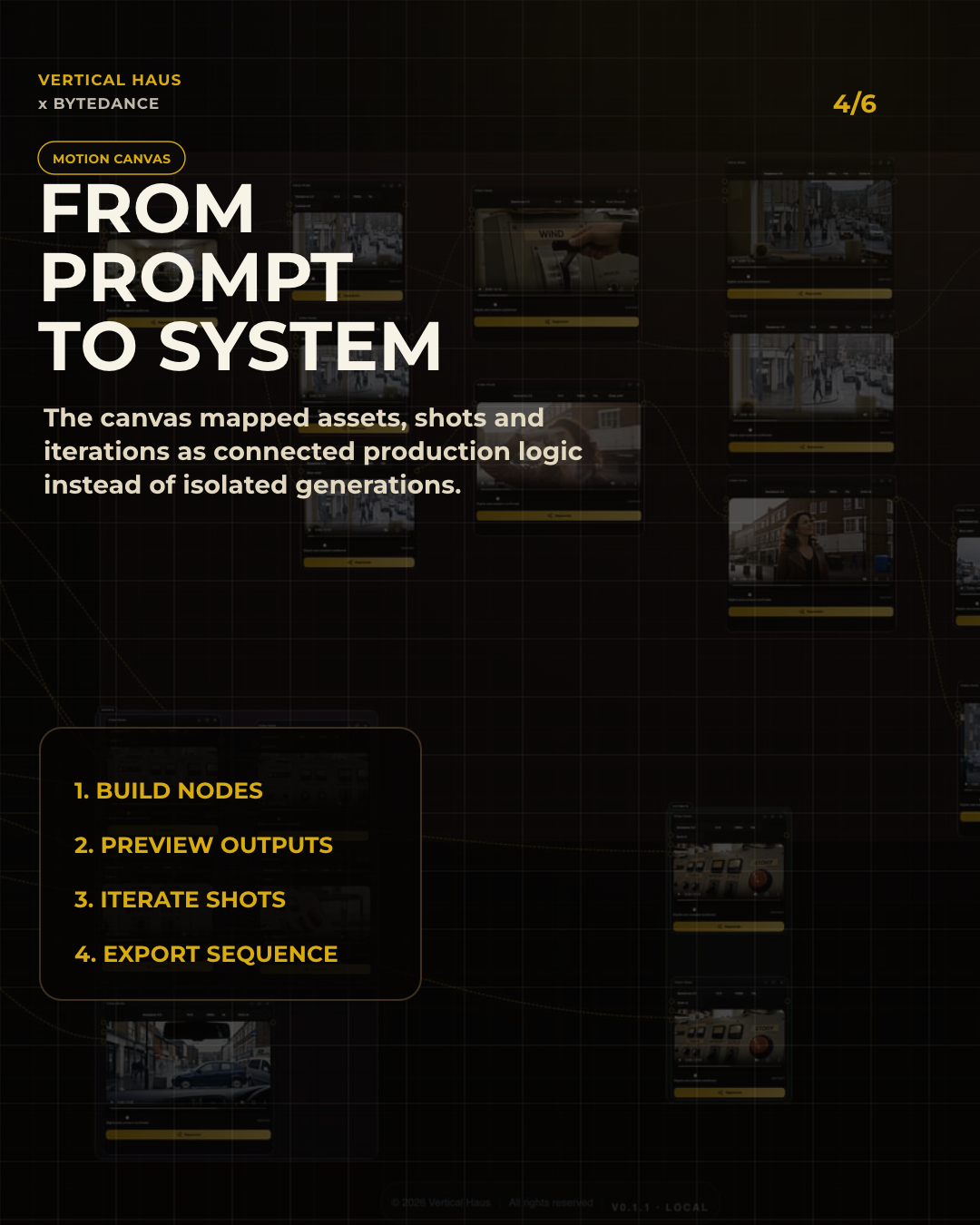
The canvas mapped assets, shots, and iterations as connected production logic rather than isolated generations. Build nodes, preview outputs, iterate shots, export sequence. That process let the team test shot flow and coverage before locking the final edit.
4) Direction: control becomes story
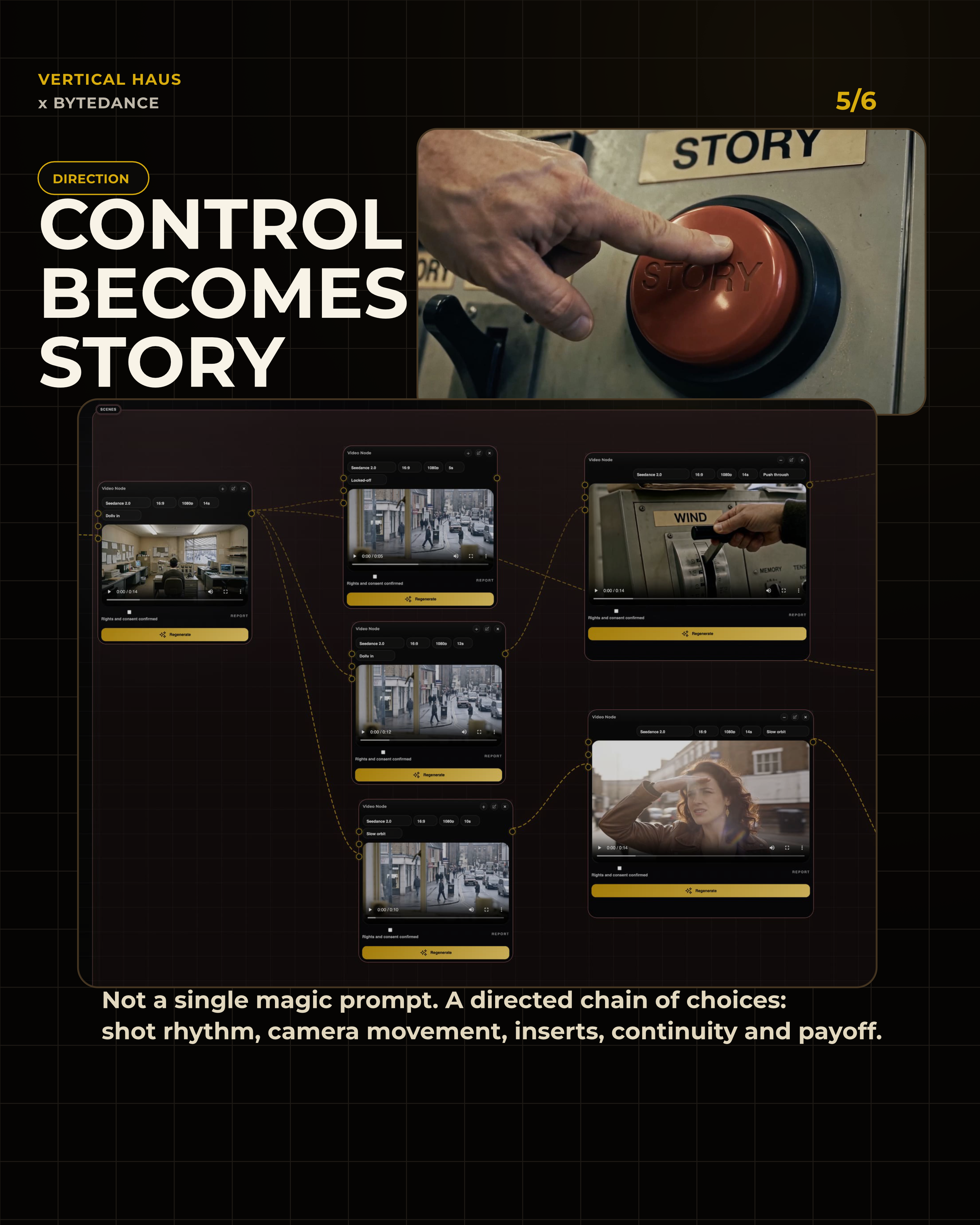
The final film is not a single magic prompt. It is a directed chain of choices: shot rhythm, camera movement, inserts, continuity, and payoff. This is where AI agents for marketing and AI production systems become useful for brands: they do not replace taste, but they can compress the distance between a decision and a visible option.
5) Final film: built to move fast
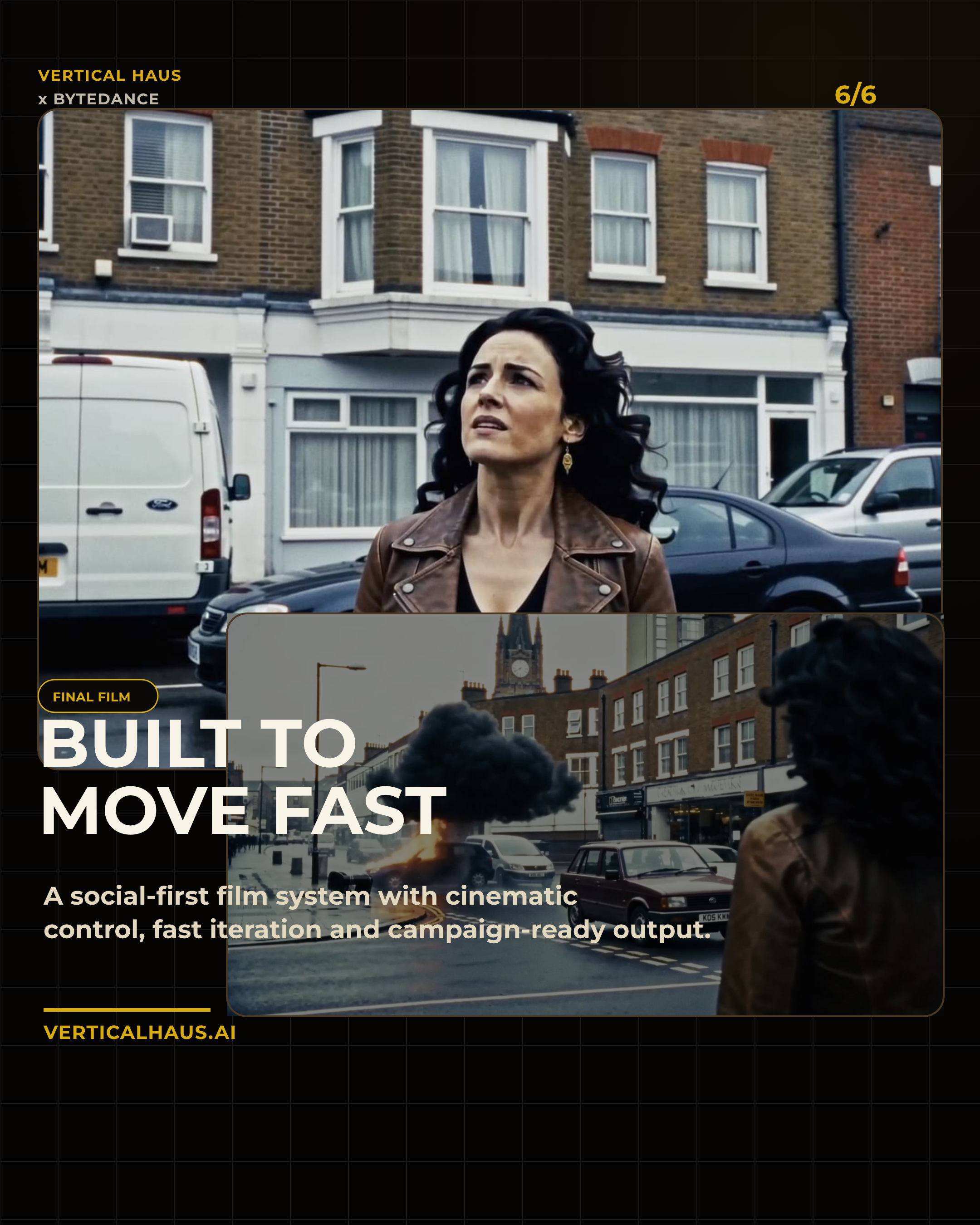
The outcome is a social-first film system with cinematic control, fast iteration, and campaign-ready output. It is designed to show brand teams the practical ceiling of AI commercial production today: rapid ideation, modular development, controlled motion, and an edit that still has a story spine.
Why Seedance 2.0 mattered
ByteDance Seed describes Seedance 2.0 as a multimodal audio-video model that supports text, image, audio, and video inputs, with stronger control over motion, editing, and multimodal references. In practice, that lines up with the production need here: a film system that can work from references and direction, then keep shots connected enough to cut.
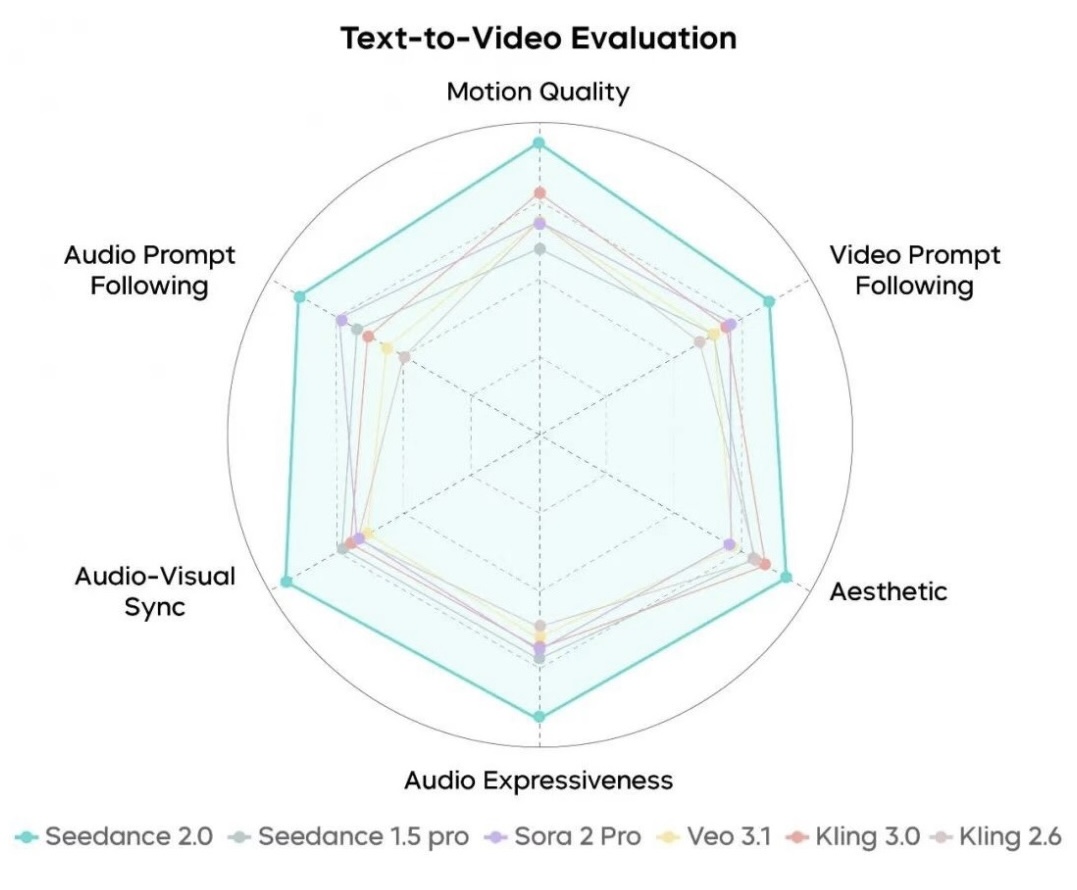
Source: ByteDance Seedance 2.0 official launch notes →
Where Seedream fits the wider stack
The film also points to a bigger workflow: video generation is stronger when image development, reference frames, and visual reasoning are handled upstream. ByteDance Seed positions Seedream 5.0 Lite around better understanding, reasoning, image-text alignment, and real-time search enhancement, which makes it relevant for concept frames, campaign boards, product visualisation, and pre-visualisation before motion begins.
Source: ByteDance Seedream 5.0 Lite launch notes →
What brands should take from it
- Start with the rule of the world. The audience follows cause and effect faster than they follow tool novelty.
- Build assets before motion. Character, location, prop, and insert consistency give generative video production something to hold onto.
- Treat the canvas like a production board. Nodes, versions, and shot chains should map directly to edit decisions.
- Use AI for speed, not vagueness. The strongest AI video commercials are still directed, reviewed, refined, and cut with intent.
Vertical Haus builds AI-native production workflows for brands that need fast concepting, controlled visual development, and campaign-ready films.