
1) Adobe turns Firefly into an agentic image, video, and campaign studio
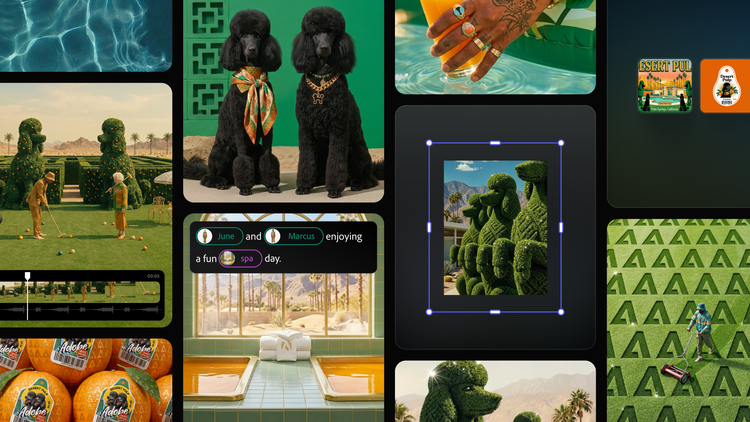
Dated evidence: Adobe announced on June 18, 2026 that it is expanding its creative agent across Firefly and Creative Cloud apps including Premiere, Photoshop, Illustrator, InDesign, and Frame.io. The Firefly AI Assistant adds brand kit creation, short product video creation with motion, audio and brand styling, Quick Cut first assemblies, and storyboard-to-video workflows. Adobe also says its upgraded Firefly studio, now in private beta, adds Elements for reusable characters, locations, and objects, plus Projects for persistent campaign context.
Why it matters for AI film and advertising: this is a practical move from generation to continuity. Campaign teams do not only need a good image or clip; they need a way to keep product shots, characters, locations, brand assets, feedback, and platform versions coherent across a whole campaign. Adobe is positioning the assistant as orchestration across the existing pro stack, not a replacement for the timeline, layer stack, review flow, or final human judgment.
Workflow dependency map: product photos, brand kit, approved style references, reusable Elements, project context, editor/retoucher ownership, review notes, platform formats, rights checks, and final export rules.
Production impact estimate: for a paid social or product-film sprint, the highest-value use case is first-pass assembly: turn stills into short product video, build storyboards, batch variants, and organize project assets before a senior editor or designer refines the work. That can compress early ideation and versioning, but final visual taste still sits with the creative lead.
Decision now: treat agentic creative systems as campaign memory. Define which assets can be reused, which edits require approval, and which outputs are only for internal exploration before giving an assistant persistent context.
Source: Adobe Newsroom, creative agent expansion (June 18, 2026) →
Source: Adobe Blog, Firefly agentic studio update (June 18, 2026) →
Independent source: The Verge, Firefly Elements and Projects coverage (June 2026) →
2) Lightroom photo-to-video makes still-image motion a normal creative-cloud task
Dated evidence: on June 15, 2026 Adobe said Lightroom’s new Photo to Video feature can transform a still photo into polished b-roll or reels with AI-generated motion powered by Firefly and Google Veo. The same update made Assisted Culling generally available, added AI Sharpen through Topaz Labs’ model, and brought object mask and audio/navigation improvements into Premiere.
Why it matters for production teams: image-to-video is no longer just a model demo. It is entering the photographer and editor workflow where campaign stills, product shots, event images, and creator captures already live. For brands with deep still-image libraries, this creates a faster path to motion tests, thumbnails, storyboards, reels, and lightweight b-roll.
Workflow dependency map: still-image rights, product accuracy, Veo/Firefly usage terms, motion prompt, aspect ratio, editor review, claim/legal review, music/sound layer, and platform delivery format.
Production impact estimate: expect the near-term value in 4-8 second social loops, pitch-deck motion, retail/product cutdowns, and internal creative tests. It is not a replacement for planned cinematography when continuity, performance, or precise product behavior matters.
Decision now: separate “motion from stills” from captured footage in the asset log. A generated motion clip should carry the original photo, prompt, model surface, and approval note before entering client-facing work.
Source: Adobe Blog, Creative Cloud workflow updates (June 15, 2026) →
Independent source: Digital Camera World, Lightroom Generate Video coverage (June 2026) →
3) Disney’s reported AI TV ad beta shows generated video, scripts, and music moving into CTV
Dated evidence: Business Insider reported on June 17, 2026 that Disney is preparing a July beta for an AI-generated TV ad tool. The report says the tool can generate scripts, video, and music in one workflow, is aimed at small and medium-sized advertisers without video assets, and is planned for Disney’s self-service ad platform. TNW covered the report on June 19 and highlighted the market risk: brands want faster CTV production, but they are also more wary of low-quality AI output.
Why it matters for advertising: CTV has been expensive because brands need scripts, edits, voice, music, versioning, compliance, and media buying before a campaign can run. If media owners make basic TV creative self-serve, the bottleneck shifts from production access to brand safety, creative quality, rights, and variant governance.
Workflow dependency map: brand guidelines, source assets, claim substantiation, script approval, generated music rights, voice/talent rules, audience/context variants, platform QA, and human signoff.
Production impact estimate: the first useful market is not Super Bowl-level storytelling. It is local advertisers, regional campaigns, fast retail offers, event promos, and test cells where a rough 15- or 30-second CTV asset is better than no video asset at all. The risk is that cheap output creates more media waste if the creative is forgettable or off-brand.
Decision now: for any self-serve generated CTV workflow, require a minimum viable creative checklist: claim review, brand fit, music clearance, product accuracy, caption/audio QA, and an audience holdout plan before launch.
Source: Business Insider, Disney AI-generated TV ads report (June 17, 2026) →
Independent source: TNW, Disney AI ad beta and AI slop risk (June 19, 2026) →
4) ElevenLabs separates consumer music discovery from commercial sound production
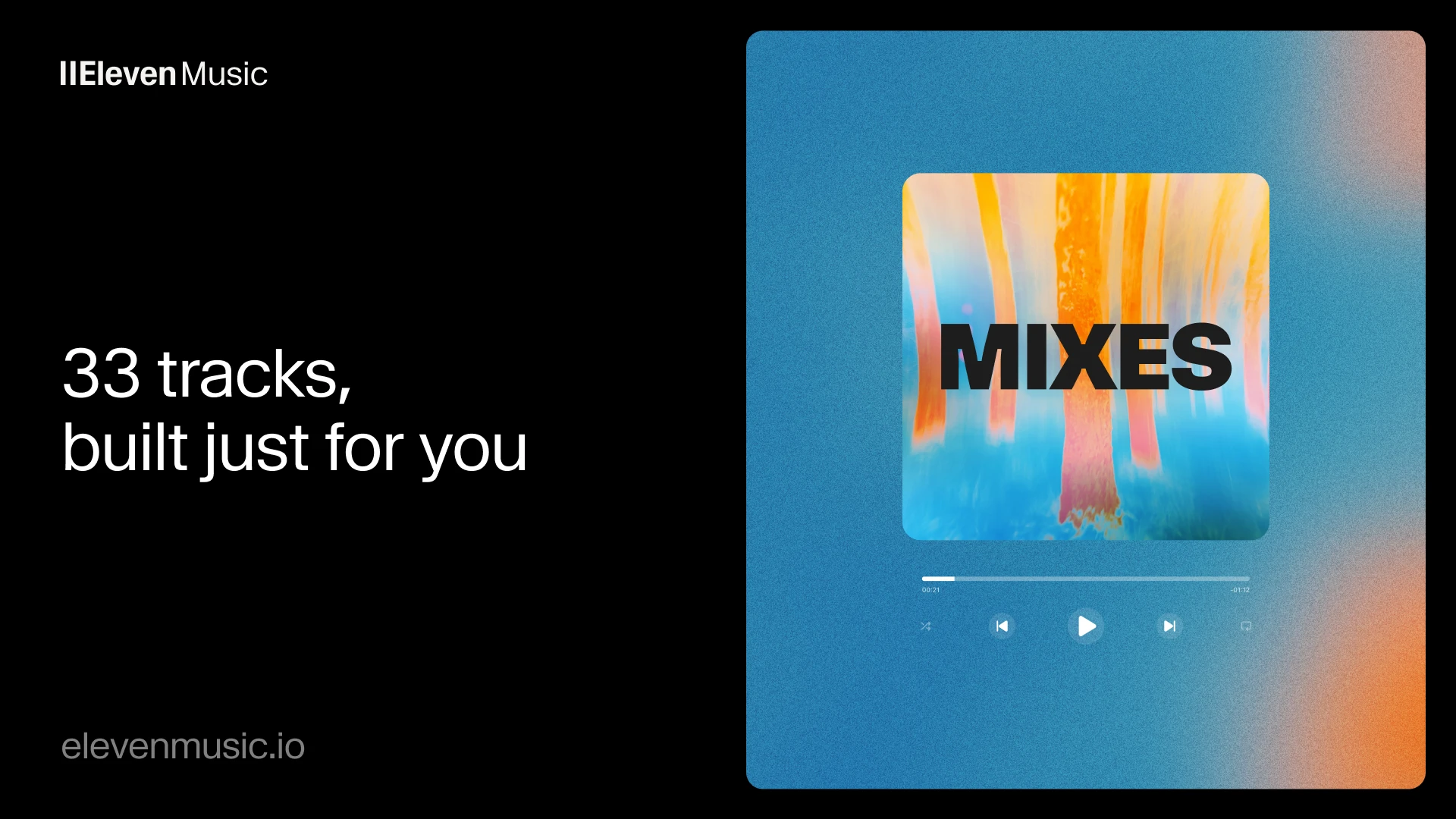
Dated evidence: ElevenLabs published a June 16, 2026 product guide explaining the difference between ElevenMusic, ElevenCreative Music, and the ElevenAPI, all powered by Music v2. It says ElevenCreative Music and the ElevenAPI are built for professional use cases including background music for video, sound effects, application integration, and AI-generated audio at scale, with tracks trained on licensed data and cleared for commercial use. On June 18, ElevenLabs launched Mixes on ElevenMusic: personalised weekly playlists with 33 tracks, including generated tracks made for the listener.
Why it matters for AI sound generation: the important split is between discovery and deployability. Consumer music generation can be playful and personalised, but advertising work needs licensing, download rights, usage scope, cue documentation, API access, and a professional workflow that can survive client review.
Workflow dependency map: music brief, commercial-use product surface, model/version, generated track ID, licence status, territory and media use, edit length, loop/stem needs, cue sheet, and client approval.
Production impact estimate: generated music can accelerate scratch-score exploration and social edits, especially when the campaign needs many mood directions quickly. For paid film, CTV, game, and podcast placements, music supervision still needs to validate the licence path and document usage before delivery.
Decision now: label AI music by status before it enters an edit: personal/discovery, scratch, review, licensable, or deployable. Editors should not have to infer rights from a file name.
Source: ElevenLabs, Music product surfaces explained (published June 16; updated June 17, 2026) →
Source: ElevenLabs, Introducing Mixes on ElevenMusic (June 18, 2026) →
5) Fox and NVIDIA show the ad stack becoming agentic after the creative is made
Dated evidence: Fox Corporation announced on June 17, 2026 that Fox Advertising will launch an end-to-end agentic advertising platform powered by Fox AdStudio. Fox says it will embed agents across audience planning, media transactions, and activation across linear and digital media, with partner workflows involving WPP, Horizon Media, Universal Ads by Comcast, and Simulmedia. On June 18, NVIDIA published its Cannes Lions preview, saying partners including AWS, Criteo, Higgsfield, KERV.ai, and Taboola are using NVIDIA infrastructure for AI advertising and marketing operations.
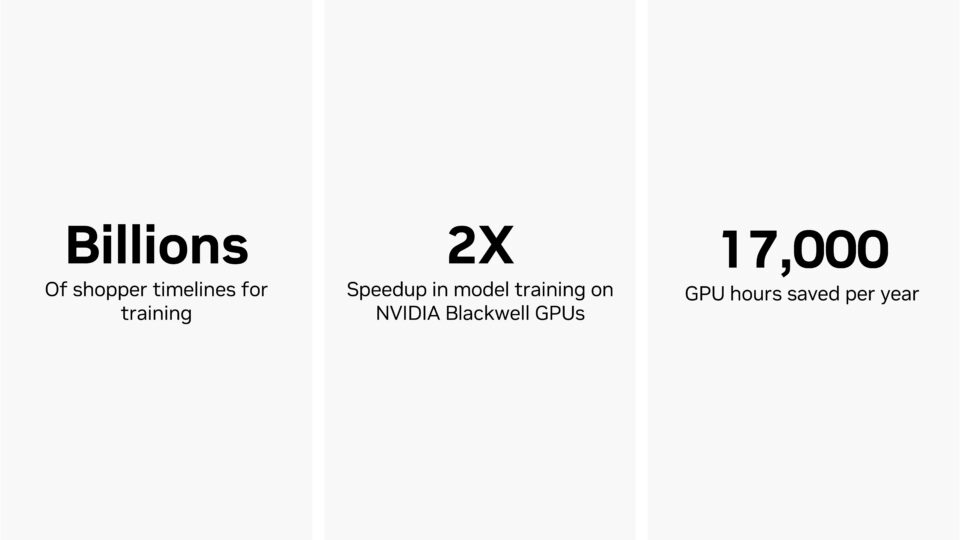
Why it matters for film and advertising teams: generated creative is only one piece of the system. The next competitive layer is whether teams can connect image, video, and sound assets to planning, buying, contextual matching, measurement, and optimization without losing governance. NVIDIA’s post cites Criteo achieving roughly a 2x speedup in model training on Blackwell GPUs and saving roughly 17,000 GPU hours a year, while Higgsfield is described as orchestrating 35+ image, audio, and video models in campaign agents.
Workflow dependency map: creative asset IDs, audience definition, platform permissions, buy-side/sell-side agent limits, brand safety, contextual suitability, measurement plan, audit logs, and human override rules.
Production impact estimate: the practical gain is faster campaign setup and iteration, not autonomous taste. Agentic media systems can reduce handoff friction, but they can also accelerate bad creative if the underlying asset taxonomy, audience logic, and measurement plan are weak.
Decision now: connect generated assets to campaign metadata at creation time. If a video, image, voice, or music asset cannot carry rights, audience, source, model, and review data, it is not ready for agentic media execution.
Source: Fox Corporation, Fox AdStudio agentic platform (June 17, 2026) →
Independent source: Adweek, Fox agentic ad platform coverage (June 17, 2026) →
Source: NVIDIA Blog, AI advertising infrastructure at Cannes Lions (June 18, 2026) →
Risk to live campaigns this week
| Workflow area | Primary dependency | Brand/legal risk | Delivery impact |
|---|---|---|---|
| Agentic creative studio | Persistent project context, reusable assets, human review rules | Medium-high: context reuse can spread stale or unapproved assets | High for campaign variant production and first-pass edits |
| Still-image motion | Original photo rights, model surface, prompt record, product accuracy | Medium: generated motion can imply product behavior that was not captured | Medium-high for reels, b-roll, thumbnails, and pitch material |
| AI TV ad generation | Brand checklist, music rights, script claims, human signoff | High: low-quality or off-brand CTV output can damage trust quickly | High for SMB and regional CTV access |
| Generated music | Commercial-use surface, licence status, cue documentation | High if discovery tracks are mistaken for deployable campaign music | Medium-high for scratch scoring and social edits |
| Agentic media activation | Asset metadata, audience constraints, audit logs, override rules | Medium-high: automation can scale bad assumptions across media buys | High for planning, buying, and optimization speed |
Operator checklist for next sprint
- Image: tag source photos, AI edits, generated motion, and final exports as separate assets.
- Video: define what an assistant may assemble automatically and what requires editor approval.
- Sound: keep consumer/discovery music away from deployable campaign folders unless rights are explicit.
- Media: require generated assets to carry rights, model, audience, and review metadata before agentic buying starts.
We can map AI image, video, sound, and ad-platform changes to your campaign workflow, then turn the useful ones into a sprint-ready production plan.
Sources
- Adobe Newsroom: Adobe Unveils Major Expansion of Creative Agent (June 18, 2026)
- Adobe Blog: Firefly agentic capabilities and upgraded studio (June 18, 2026)
- Adobe Blog: Creative Cloud workflow updates (June 15, 2026)
- The Verge: Adobe Firefly AI studio update coverage (June 2026)
- Digital Camera World: Lightroom Generate Video coverage (June 2026)
- Business Insider: Disney AI-generated TV ads report (June 17, 2026)
- TNW: Disney AI ad beta and AI slop risk (June 19, 2026)
- ElevenLabs: ElevenMusic, ElevenCreative Music and ElevenAPI (published June 16; updated June 17, 2026)
- ElevenLabs: Introducing Mixes on ElevenMusic (June 18, 2026)
- Fox Corporation: Fox AdStudio agentic advertising platform (June 17, 2026)
- Adweek: Fox agentic advertising platform coverage (June 17, 2026)
- NVIDIA Blog: AI advertising and marketing at Cannes Lions (June 18, 2026)